The FE - Bangladesh's trade deficit widens to $24bn as exports fall
Bangladesh's trade deficit has widened to roughly $24 billion as exports contracted, according to The Financial Express, sharpening concerns about the country's external account position.
The financing bridge
The deficit widening coincides with a $3.3 billion annual financing commitment from the International Islamic Trade Finance Corporation (ITFC), signed at ITFC's Jeddah headquarters during a high-level Bangladeshi delegation visit. The facility, covering the fiscal period from July 2026 to June 2027, will underwrite imports channeled through Bangladesh Petroleum Corporation (BPC), Petrobangla, and the Bangladesh Agricultural Development Corporation (BADC) — collectively covering fuel, liquefied natural gas, and fertilizer procurement.
The agreement was executed by ITFC Chief Operating Officer Nazeem Noordali and Economic Relations Division Secretary Md. Shahriar Kader Siddiky, with ITFC Chief Executive Officer Eng Adeeb Yousuf Al Aama witnessing the signing. Officials framed the arrangement as a mechanism to ensure uninterrupted supplies of essential commodities. Since 1977, the ITFC and its parent Islamic Development Bank Group have approved more than $22.6 billion in financing for Bangladesh, with petroleum products and LNG accounting for the bulk of cumulative disbursements. ITFC itself, established in 2008, has extended over $96 billion in trade finance across Organisation of Islamic Cooperation member-states since commencing operations.
Calibrating the RMG incentive
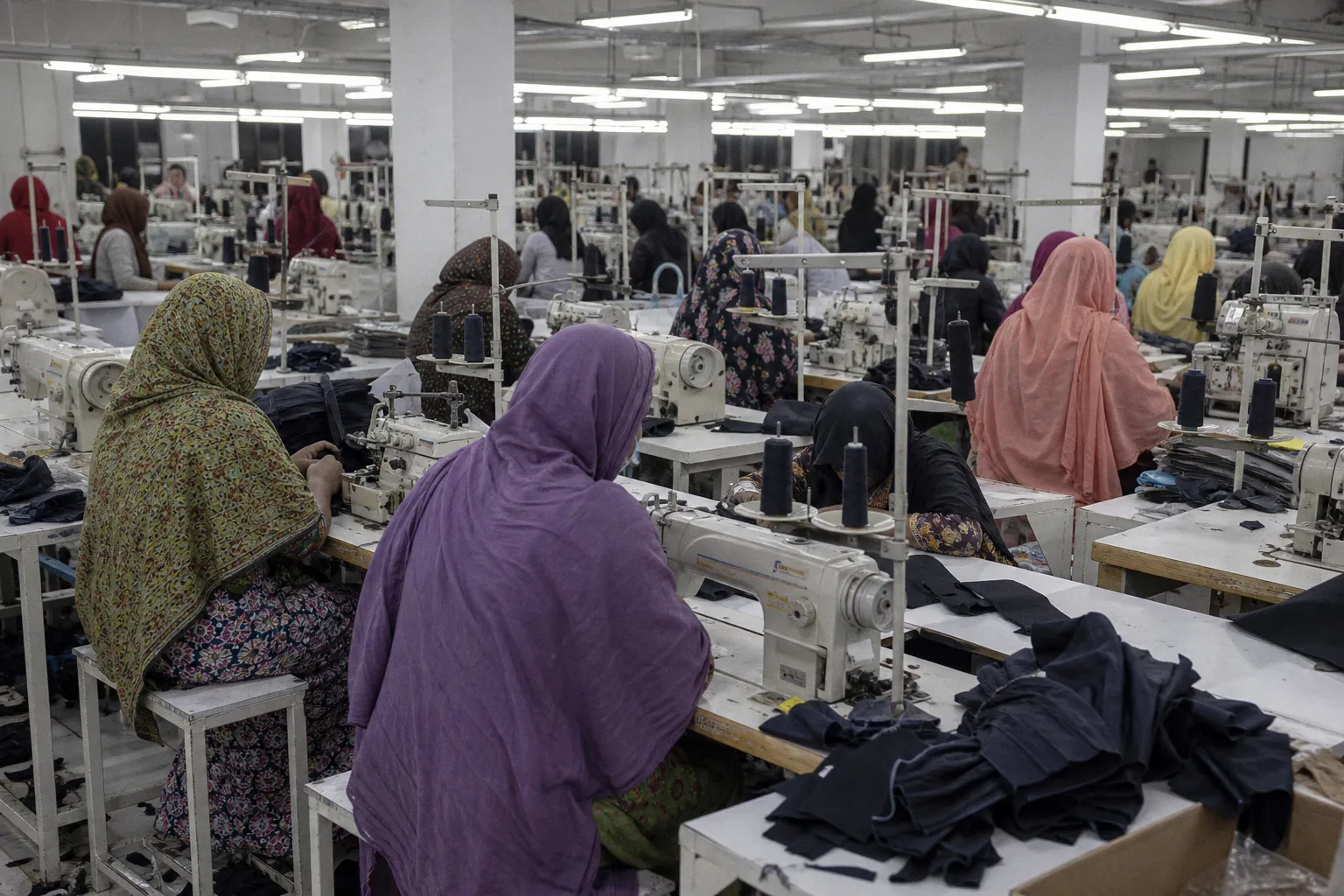
In a parallel policy adjustment, the government is preparing to raise the cash incentive for apparel exports manufactured using domestically-sourced yarn from 1.5 percent to 5 percent, according to Fibre2Fashion. The recalibration targets the upstream yarn value chain — historically dominated by imported inputs — seeking to retain a larger share of value addition within Bangladesh's dominant export sector. Readymade garments remain the principal foreign exchange earner, and any policy lever that compresses the import coefficient in yarn procurement carries direct implications for the trade balance arithmetic.
Structural arithmetic and small-business exposure
The simultaneous deficit expansion and incentive reset point to a recurring pattern: export earnings under cyclical pressure while the import bill remains structurally rigid. Multilateral facilities such as the ITFC agreement provide liquidity cover but do not alter the underlying export competitiveness equation. For small enterprises operating outside the RMG complex, the deteriorating trade balance signals heightened macroeconomic headwinds — currency volatility, input cost passthroughs, and tighter dollar liquidity — that compress margins across the board. Diversification away from traditional manufacturing dependence is becoming a structural necessity rather than a strategic option, with digital platforms increasingly reshaping how smaller producers reach external markets.
What to monitor
Three indicators will determine whether the deficit trajectory stabilizes through the remainder of FY2026-27. First, monthly readymade garment shipment data from the Export Promotion Bureau, particularly through the year-end order cycle. Second, the disbursement timeline under the ITFC facility, which will reveal whether the $3.3 billion envelope fully offsets BPC and Petrobangla import financing requirements. Third, any revision to the cash incentive framework for non-yarn RMG categories, which would signal a broader recalibration of the export subsidy architecture.