Check Bangladesh Bank credit reports online via CIB
The Credit Information Bureau (CIB) under Bangladesh Bank operates as the central registry of borrower obligations across the country's banking system, yet the database remains structurally…
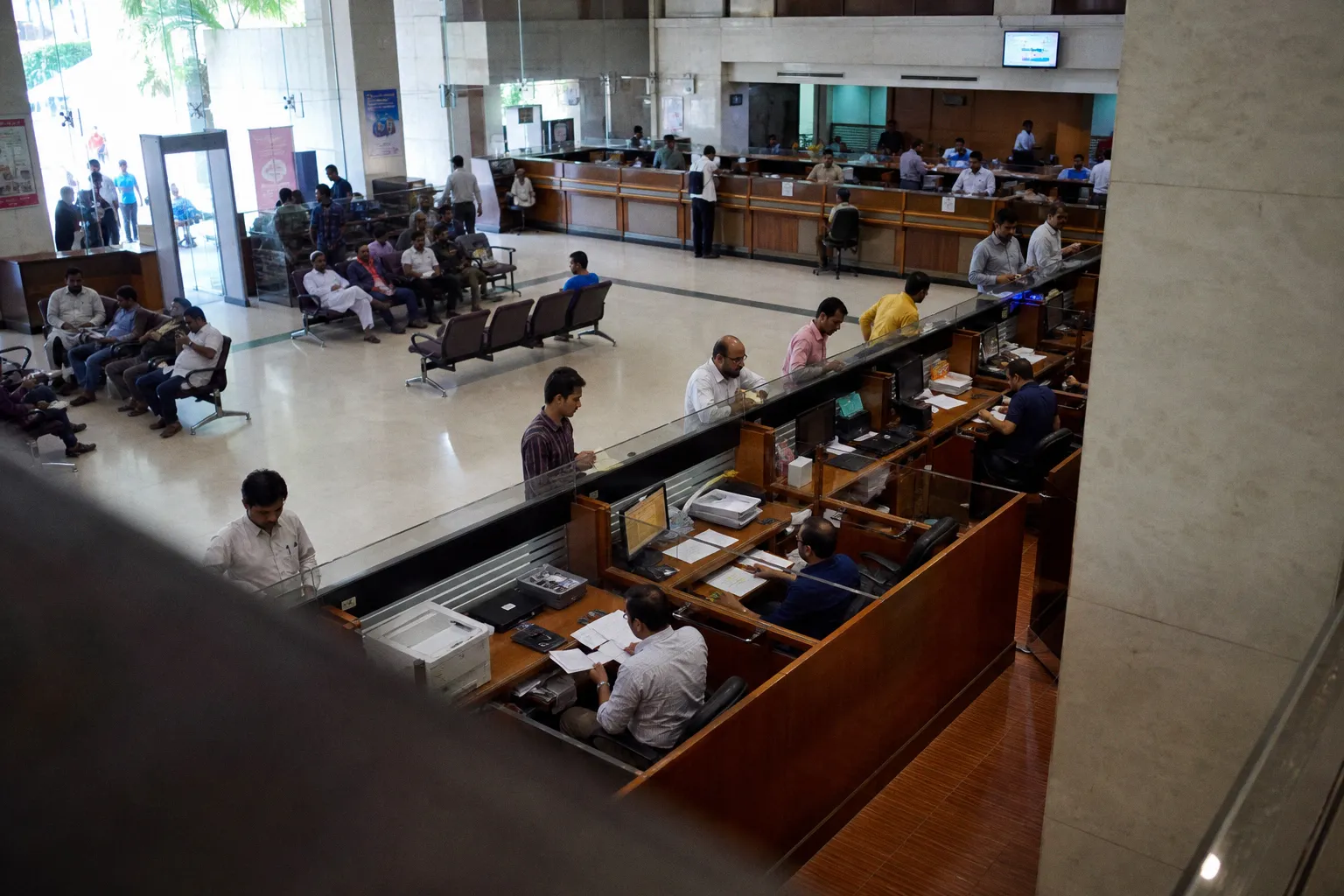
The Credit Information Bureau (CIB) under Bangladesh Bank operates as the central registry of borrower obligations across the country's banking system, yet the database remains structurally inaccessible to the individuals whose financial histories it catalogues. This institutional asymmetry — where the regulator aggregates the data but withholds direct retrieval rights — defines the credit transparency landscape for Bangladeshi borrowers, loan applicants, and small enterprise operators, all of whom must navigate bank-mediated channels to obtain a record of their own creditworthiness. The statutory design is deliberate, the architecture is closed, and the pathway to inspection runs exclusively through licensed intermediaries.
Understanding the Role of the Credit Information Bureau in Bangladesh
The CIB operates as a statutory data repository under the Credit Information Bureau Act and subsequent Bangladesh Bank circulars, consolidating credit-related submissions from scheduled banks, non-bank financial institutions (NBFIs), and microfinance institutions into a centralised national credit register. Its operational mandate is institutional: lenders submit borrower data — outstanding balances, repayment histories, classification status (standard, substandard, doubtful, bad/loss), and default flags — and lenders retrieve that data when evaluating new credit exposures.
The bureau's structural function is dual. First, it serves as the early-warning mechanism for Bangladesh Bank's prudential supervision, allowing the regulator to identify concentrated exposures, sectoral credit risk, and individual borrower concentration. Second, it operates as a coordination tool for commercial lenders, reducing information asymmetry that historically inflated non-performing loan ratios across the banking sector.
For related context, see Bollywood Box Office June 2026 Report: 72% Surge Over May.
For related context, see Compare central bank rate forecasts to hedge business loans.
The CIB is not a consumer-facing platform. It is a supervisory infrastructure built for institutional creditors, and access flows exclusively through licensed intermediaries.
What the CIB is not, and where public perception frequently diverges from statutory design, is a consumer credit bureau in the Western retail-finance sense. There is no annual free credit report entitlement, no public-facing score generator, and no individual subscription model. The credit information collected by the CIB is reported by lenders, owned by lenders, and queried by lenders — with the underlying borrower able to inspect the record only through formal institutional channels.
Why Direct Public Online Access to CIB Reports Does Not Exist
The absence of a public CIB portal is not a regulatory oversight or a pending digitisation project awaiting deployment; it is a deliberate statutory and architectural choice embedded in the bureau's institutional mandate. Several structural factors sustain this configuration.
First, the CIB's primary client is the regulated lender, not the retail borrower. Bangladesh Bank designed the system to enable institutional risk assessment, and the entire submission-retrieval architecture — including the standardised CIB inquiry forms, the fee schedule levied per query, and the data exchange protocols — operates on a bank-to-bank basis.
Second, credit information in Bangladesh carries material commercial sensitivity. Outstanding loan balances, classified status, and default flags feed directly into lending decisions, pricing models, and recovery proceedings. Allowing unrestricted public access would introduce market distortions and could facilitate coordinated default behaviour, where borrowers with deteriorating classifications could selectively shop for institutions without flagging their true exposure profile.
Third, the statutory framework does not contemplate a borrower-initiated retrieval mechanism. Unlike the United States Fair Credit Reporting Act regime, which entitles consumers to annual free reports from each of the three major bureaus, Bangladesh has not enacted parallel consumer credit disclosure legislation. The CIB Act and subsequent Bangladesh Bank circulars vest inquiry rights in licensed financial institutions, not natural persons.
Bangladesh's credit infrastructure was engineered for the lender, not the borrower. Until the regulatory framework is amended, direct retrieval rights will remain outside the statutory perimeter.
This institutional arrangement carries practical consequences for the prospective loan applicant. A first-time borrower preparing documentation for a working capital facility, a small enterprise seeking term financing, or an individual applying for a mortgage cannot independently verify their CIB status before approaching a bank. They must request the institution to retrieve the data on their behalf, an asymmetry that complicates pre-application credit positioning and dispute resolution.
Step-by-Step Procedure for Requesting Your Credit Report via Banks
The retrieval pathway for a CIB report runs exclusively through licensed financial institutions, and the process is institutionally codified. Borrowers seeking their credit record must follow a defined sequence:
1. Identify a participating bank or NBFI. The borrower must hold an account — savings, current, or term deposit — at the institution processing the inquiry, or be in active loan application status with that institution.
2. Submit a formal written application. Most banks require a signed request on a prescribed form or letterhead, accompanied by the borrower's National ID (NID), TIN where applicable, and account details. The application typically includes the borrower's explicit consent to the institution querying the CIB database on their behalf.
3. Institution initiates the CIB inquiry. The bank's credit department submits the borrower's credentials to Bangladesh Bank's CIB system through the authorised channel, paying the prescribed inquiry fee to the central bank on a per-query basis.
4. Receive and review the report. The bank receives the consolidated credit data and is required to share it with the borrower upon request, though the obligation to proactively disclose the report contents varies across institutions.
5. Dispute resolution, where applicable. If the borrower identifies inaccuracies in the report — outstanding balances recorded against closed accounts, misclassified loans, or fraudulent entries attributed to identity misuse — the dispute must be raised through the originating bank, which then escalates to the reporting institution and ultimately to Bangladesh Bank's CIB wing.
This procedural architecture means that the borrower's relationship with the reporting institution becomes the operational gateway. A borrower with a frozen account, a closed facility, or no active relationship with any scheduled bank faces a structural barrier to accessing their own credit record, since most institutions decline to process CIB inquiries for non-account-holders or non-applicants.
Navigating Fees and Processing Timelines at the Branch Level
The fee structure operates on two layers. At the institutional level, Bangladesh Bank levies a charge on the querying bank for each CIB inquiry — a cost the bank absorbs or passes through to the borrower depending on internal policy. At the retail level, individual banks and NBFIs apply their own service charges for processing CIB requests, and these charges are not standardised across the sector.
The processing timeline is similarly institution-dependent. Bangladesh Bank's CIB system responds to institutional queries on a near-real-time basis where digital connectivity holds, but the end-to-end duration — from the borrower's branch submission to the receipt of the printed report — depends on the bank's internal workflow, the completeness of the borrower's file, and whether the inquiry triggers cross-verification with multiple reporting institutions. Borrowers should anticipate a range measured in working days rather than minutes, with manual intervention at the credit department level often extending the timeline during peak lending seasons.
| Parameter | CIB System Level | Bank Branch Level |
|---|---|---|
| Inquiry fee | Bangladesh Bank charge per query, absorbed or passed through by bank | Variable bank service charge to customer, not standardised |
| Processing speed | Near-instantaneous upon query submission | Working days, dependent on internal credit department workflow |
| Disclosure obligation | Data returned to querying institution only | Inconsistent borrower-facing disclosure across institutions |
| Dispute pathway | Reporting institution escalation to CIB wing | Bank-mediated, multi-stage, requires original lender cooperation |
| Borrower prerequisites | None at system level | Account relationship or active loan application required |
This dual architecture explains the structural friction borrowers encounter: the regulator's backend operates with technical efficiency, while the borrower-facing layer introduces variability that depends on institutional policy and operational capacity.
Protecting Your Financial Data Against Third-Party Fraudulent Claims
The structural opacity of the CIB system has generated a parallel market of fraudulent claims, with websites and mobile applications purporting to offer "CIB online check" services, downloadable credit reports, or instant credit score generation. These claims are uniformly illegitimate and constitute either phishing operations harvesting National ID and TIN credentials, fee-extraction schemes charging for non-existent reports, or data-harvesting fronts reselling borrower credentials to third parties.
Bangladesh Bank has issued no authorisation for any third party to retrieve, hold, or display CIB data. The bureau's data exchange protocols operate exclusively within the closed network of licensed financial institutions and the central bank's supervisory infrastructure. Any website — irrespective of visual presentation, branding, or fee schedule — claiming direct public access to CIB records is operating outside the statutory framework.
For borrowers concerned about credit data security in an increasingly digital financial environment, the prudent posture is procedural: limit CIB inquiries to interactions with scheduled banks and NBFIs verified by Bangladesh Bank's licensing register, decline to enter National ID or TIN credentials on third-party credit-checking platforms, and report suspected fraudulent credit entries through the originating bank's credit administration department. Where borrowers wish to understand the broader landscape of digital banking security and fintech authentication frameworks operating in Bangladesh, the financial security resources at FuzoMoney provide contextual analysis of institutional safeguards and consumer-side risk mitigation strategies.
Forward Projection: The CIB's Institutional Trajectory
The CIB's institutional posture is unlikely to shift toward consumer-facing access in the near term. The statutory architecture prioritises prudential supervision over borrower transparency, and the regulatory bandwidth at Bangladesh Bank remains focused on non-performing loan reduction, sectoral exposure monitoring, and post-LDC-graduation credit market formalisation rather than consumer credit disclosure reform. Borrowers navigating the existing system should treat CIB access as a bank-mediated service — a procedural step within a loan application or account relationship — rather than an independently exercisable right.
The forward trajectory points toward incremental digitisation of the institutional inquiry channel rather than a structural rebalancing of access rights. Mobile banking platforms operated by major scheduled banks may eventually integrate CIB inquiry functions into their retail interfaces, but such integration would still operate under bank-mediated authorisation, not direct public access. Until the Credit Information Bureau Act is amended to vest explicit retrieval rights in natural persons, the borrower's pathway to their own credit record will continue to route through the institution — a structural feature of Bangladesh's credit architecture, not a transitional limitation awaiting removal.