History of Bangladesh Politics: Key Milestones and Shifts
The hardest operational problem in Bangladesh politics has rarely been counting votes. It has been persuading rival parties that the institution supervising the count can be trusted.
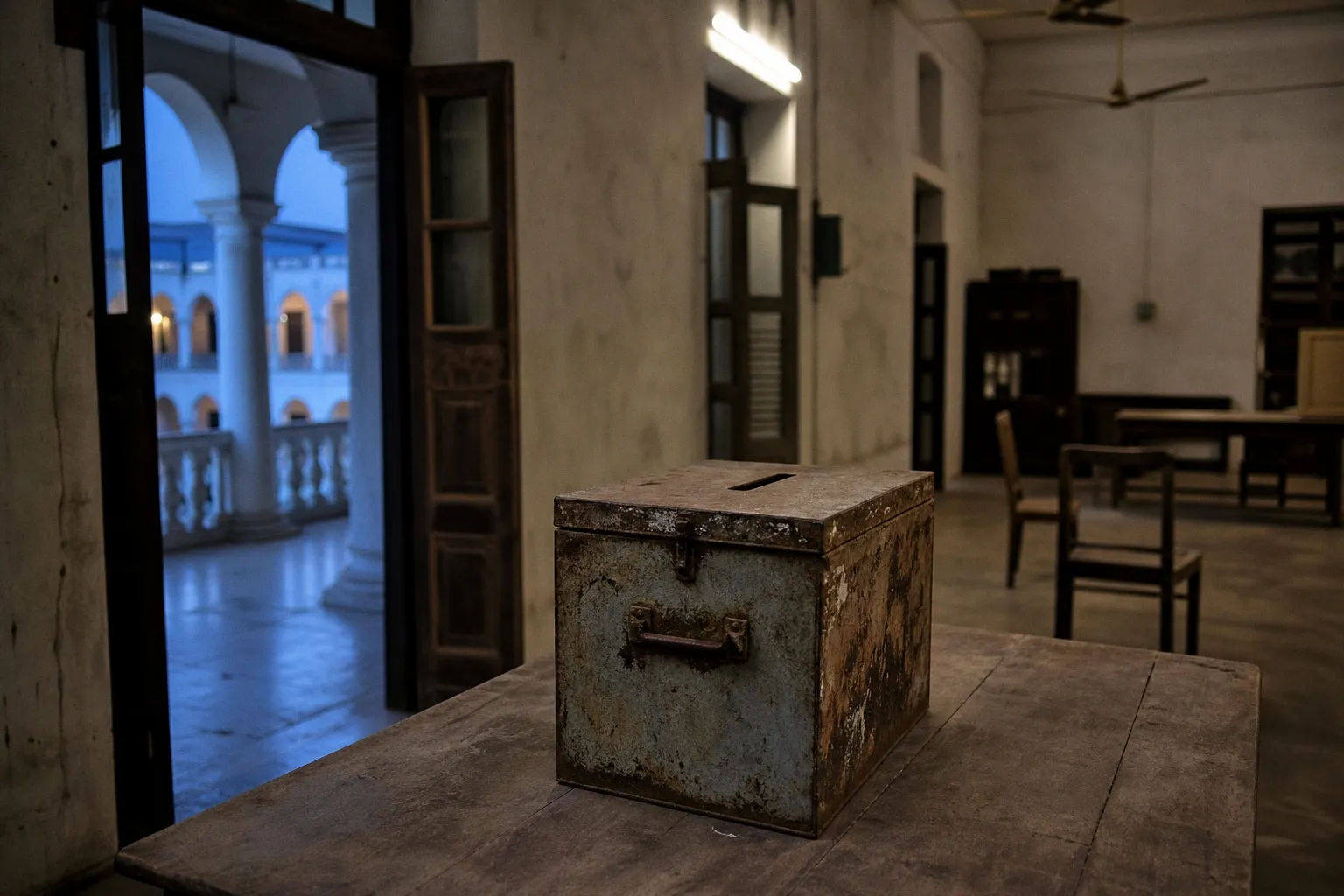
That question has shaped constitutions, street protests, military interventions and the country’s most recent electoral reset.
The history of Bangladesh politics is therefore not a neat march from independence to stable democracy. It is a cycle of rapid institutional redesign: a parliamentary beginning, a one-party turn, 15 years of military governance, a hard-won caretaker model, its abolition, and then its restoration after the upheaval of 2024. The February 2026 election has added a new chapter, but it has not erased the old pressure points.
From liberation to one-party rule
Bangladesh emerged through a war that made politics inseparable from national identity. Independence was declared on March 26, 1971, and the Liberation War ended on December 16 that year, when the country formally emerged as an independent state.
The first years brought the immense workload of state-building: rebuilding infrastructure, forming public institutions, managing food and economic pressures, and translating the political promises of the independence movement into a functioning constitutional order. The Awami League, led by Sheikh Mujibur Rahman, was the central governing force in this period.
But the early parliamentary system did not settle into a durable routine. Economic distress, political violence and administrative strain mounted. In January 1975, Sheikh Mujibur Rahman introduced BAKSAL, a one-party system intended to centralise political authority and accelerate national reconstruction.
For supporters, this was presented as a response to a state under acute pressure. For opponents, it marked a sharp break from pluralist politics. The distinction matters because it remains at the core of Bangladesh’s political argument: can stability be built by concentrating power, or does concentrated power eventually make the state more brittle?
Sheikh Mujibur Rahman was assassinated on August 15, 1975. The event did not merely remove the country’s founding leader. It opened a long period in which military institutions became central political actors.
Bangladesh’s constitutional story has often turned on a practical question: who has the authority to run the state when elected politics loses legitimacy?
Military governance and the long route back to elections
From 1975 to 1990, Bangladesh experienced 15 years of military rule and military-backed government. This period reshaped party organisation, public administration and the balance between civilian institutions and the armed forces.
The country did not become politically inactive during these years. Quite the opposite. Parties, student groups, professional associations and labour networks remained part of political life, though under restrictions and changing levels of pressure. The Bangladesh Nationalist Party, or BNP, became a major force during this period, while the Awami League remained the other central pole of national politics.
That two-pole structure would prove remarkably durable. The names of leaders and the legal framework around elections changed, but the contest between the Awami League and BNP became the main operating system of Bangladesh’s electoral politics.
The fall of military ruler Hussain Muhammad Ershad in 1990 created an opening for a more competitive democratic arrangement. Yet the immediate challenge was not only holding an election. It was building a mechanism that both sides would accept before the election even began.
The answer was the non-party caretaker government system. First introduced in 1990 during the democratic transition, it was designed to oversee elections without the sitting political government controlling the process. In 1996, the 13th Constitutional Amendment formally institutionalised the system.
The caretaker model was, in effect, a trust bridge. It did not solve every political dispute. No election system can do that. But it recognised a local reality: Bangladesh’s major political parties had deep doubts about one another’s ability to administer a neutral contest while in office.
The architecture was simple in principle but politically consequential. Elections could be held under a temporary non-party arrangement, limiting the incumbent’s direct control over the state machinery during a campaign. For a country with high-stakes winner-takes-all politics, that was not a technical footnote. It was a core stabiliser.
Why the two-party rivalry became so intense
The major political parties in Bangladesh history are often described as rivals. That is accurate, but incomplete. Their competition has also become entwined with different readings of the country’s past, its identity, its relationship with religion in public life, and its foreign-policy orientation.
The Awami League’s political legitimacy has been closely tied to the Liberation War and the legacy of Sheikh Mujibur Rahman. The BNP, formed in a different political moment, developed its own nationalist platform and governing base. Over time, each side came to see the other not simply as an electoral competitor but as a threat to the country’s proper political direction.
That mindset has a cost. It makes compromise look like weakness. It turns administrative decisions into partisan tests. And it can make an election result feel less like a temporary verdict and more like a full transfer of institutional control.
The 15th Amendment and the collapse of the trust bridge
In June 2011, the Awami League-led government under Sheikh Hasina passed the 15th Constitutional Amendment. Among its most consequential changes was the abolition of the caretaker government system. The amendment made 54 changes to the constitution in total, underlining just how broad the redesign was.
The government’s position was that the elected administration should not be replaced by an unelected interim arrangement. Critics argued that removing the caretaker system eliminated the one election-time institution that had enough distance from the incumbent to reassure opponents.
This was the point at which Bangladesh’s democracy timeline began to run into a familiar systems problem. Think of it less as a debate over a single constitutional feature and more as a platform losing its dispute-resolution layer. If the users — in this case, political parties and voters — no longer trust the process for settling conflicts, every result becomes harder to accept.
| Political mechanism | What it was meant to do | The central political risk |
|---|---|---|
| Parliamentary government after independence | Establish civilian democratic rule | Weak institutions under severe economic and political pressure |
| Caretaker government system | Create a neutral election-time administration | Dependence on elite consensus over who counts as “neutral” |
| 15th Amendment framework | Keep elections under elected constitutional government | Opposition distrust of an incumbent-managed contest |
| Post-2024 restoration | Rebuild confidence in the electoral transition | Unresolved questions over long-term implementation and party participation |
The abolition of the caretaker system was followed by years of increasingly fraught politics. The Awami League governed for 15 years under Sheikh Hasina, while opposition demands for a neutral election-time arrangement remained a central fault line.
This is where Bangladesh political evolution needs to be read carefully. The country was not simply moving between “democracy” and “non-democracy” as two clean categories. It was operating through institutions whose legitimacy depended on whether political actors accepted the rules before an election took place.
A constitution can specify a procedure. It cannot, by itself, manufacture confidence. That is the gap Bangladesh repeatedly encountered.
The July Uprising and the interim administration
The student-led July Uprising of 2024 changed the political equation at speed. On August 5, 2024, Sheikh Hasina resigned and left the country, ending her 15-year period in power. Three days later, Nobel laureate Muhammad Yunus was sworn in as Chief Adviser of an interim government.
The interim arrangement was extraordinary, and it should not be described as a routine constitutional handover. It was an extra-constitutional setup later validated under the doctrine of necessity. That distinction is more than legal language. It explains both the administration’s political space and its limits.
Its immediate job was substantial: restore public order, manage a state bureaucracy shaped by years of polarised politics, respond to public demands for accountability, and create a credible route toward elections. For ordinary citizens and businesses, these questions translate into concrete daily concerns: whether government offices function, whether courts can operate, whether licences and permits move, whether security conditions hold, and whether a policy announcement will survive the next political turn.
For founders and investors, political instability has a very direct burn rate. A delayed procurement decision can freeze a startup’s public-sector pilot. A disrupted transport network can raise delivery costs for small businesses. Uncertainty over regulation can make a local entrepreneur pause hiring. Governance is not separate from the economy; it is the infrastructure underneath it.
The Supreme Court then became a key part of the reset. On December 17, 2024, the High Court Division declared parts of the 15th Amendment unconstitutional, restoring the caretaker government system and the provision for constitutional referendums.
That ruling reopened a route that had been closed since 2011. But restoring a legal mechanism is not the same as restoring public trust overnight. The caretaker system can provide procedural distance; it still needs credible appointments, transparent administration and political restraint to work in practice.
A restored institution is not a finished repair. Its credibility will be built in the ordinary, unglamorous work of implementing it.
The 2026 election and a new political mandate
Bangladesh held its 13th parliamentary election and a constitutional referendum on February 12, 2026. The scale of the electorate was significant: 127,711,793 registered voters. Turnout was 60%, a figure that points both to broad participation and to the continuing importance of voter confidence in a contested political environment.
The BNP, led by Tarique Rahman, won a two-thirds supermajority. The constitutional referendum was endorsed by 61% of voters.
The result marked a major realignment. After the Awami League’s long period in government and the political rupture of 2024, the BNP and its allies moved from opposition politics into a position of commanding parliamentary strength.
Bangladesh’s unicameral Jatiya Sangsad has 350 seats: 300 directly elected seats and 50 reserved for women. A two-thirds majority gives a government considerable room to pursue constitutional and legislative change. That can make reforms easier to pass. It also raises the stakes for how that power is used.
On July 9, 2026, the Appellate Division of the Supreme Court, headed by Chief Justice Zubayer Rahman Chowdhury, upheld the High Court’s December 2024 ruling. The decision confirmed the restoration of the caretaker system.
For Bangladesh, that judgment matters because it removes a layer of uncertainty around the system’s legal status. The caretaker arrangement is no longer simply an interim political idea or an unresolved court ruling. It has been upheld at the highest judicial level.
Still, several questions remain open. The exact binding force and long-term implementation of proposals associated with the July Charter referendum are not yet settled in public terms. Nor is the future status of Awami League participation in future local and national elections fully clear following the political realignment.
Those uncertainties should not be treated as small print. They will shape whether the next phase becomes a durable democratic reset or another episode in Bangladesh’s recurring institutional cycle.
Politics, legitimacy and the next test
Bangladesh’s history shows that election day is only the visible part of the political process. The deeper test lies in the months before a vote and the months after it: whether opposition parties can organise, whether institutions can act without selective pressure, whether courts can enforce limits, and whether the winner governs as a temporary mandate-holder rather than the permanent owner of the state.
There is a useful economic analogy here. A country can attract attention through a single major event, much as sports and live events can drive travel growth. But sustained confidence comes from the underlying system: transport, rules, service quality and predictability. Politics works in much the same way. A landmark election can reset sentiment; only reliable institutions can hold it.
For Bangladesh’s public institutions, the practical priorities are now clear:
1. Make the caretaker framework operational, not symbolic. Its authority will depend on transparent rules for appointments, timelines and the powers of an election-time administration.
2. Protect political competition beyond national elections. Parliamentary politics, municipal governance, student politics and local organising all need room to function without becoming routes to retaliation.
3. Treat constitutional reform as implementation work. A referendum result creates a mandate, but agencies, courts and parliament must translate it into rules people can understand and rely on.
4. Keep the economy inside the governance conversation. Investors, exporters, small businesses and digital firms need predictable decisions more than dramatic announcements.
5. Leave space for political return and peaceful opposition. A system is more resilient when losing an election does not mean losing the ability to participate in national life.
A history still being written
The political history of Bangladesh began with a struggle for self-determination and has repeatedly returned to the question of how power can be transferred without destabilising the state. The country has experienced one-party rule, military governance, competitive electoral eras and prolonged partisan deadlock. Each phase has left institutional habits behind.
The restoration of the caretaker system, the 2026 election and the Supreme Court’s July ruling do not guarantee a settled future. They do, however, create a new operating framework after a period in which the old one had visibly broken down.
For Bangladesh’s growing tech and business ecosystem, that is the tangible takeaway. Democratic credibility is not an abstract international metric. It affects permits, payments, hiring, logistics, investment decisions and the confidence to build for the long term. The next milestone in Bangladesh politics will not be another constitutional headline alone. It will be whether the country can make its renewed rules work when the political pressure returns.