Global Supply Chain Shifts: Impact on Bangladesh Markets
Thailand, the Philippines, and Argentina are being described by a financial publication as rising participants in the global supply chain, with the shift linked to companies reducing dependence on China.
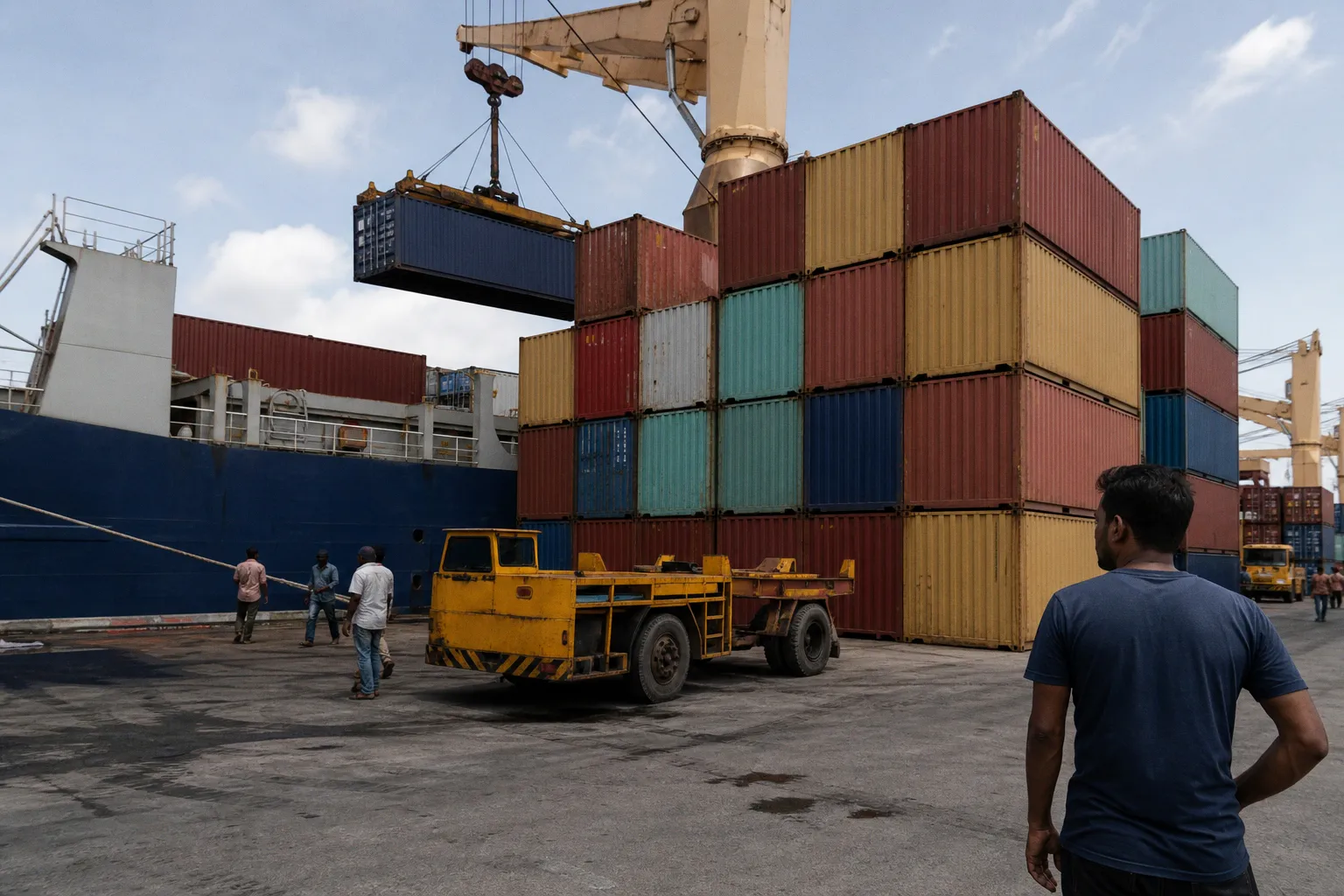
For Bangladesh, the signal is not that China is being replaced, but that supply-chain diversification is becoming more explicit in corporate and policy language. That matters for exporters, importers, and investors who need to judge where production, sourcing, and logistics risk may move next.
Diversification is the operative term, not decoupling
The reported elevation of Thailand, the Philippines, and Argentina should be read as part of a broader search for alternative production and sourcing nodes. The available source material does not establish the scale of the shift, the sectors involved, or the companies making these decisions. It only supports a narrower conclusion: some market commentary is now identifying these three economies as beneficiaries of efforts to reduce reliance on China.
That distinction is important. Another source in the same evidence cluster says businesses from Africa to Latin America are deepening supply-chain ties with China. In institutional terms, this points to fragmentation rather than a clean exit. China remains present in supply-chain narratives even as companies and governments look for redundancy elsewhere.
For related context, see 2026 World Cup Exposes Global Football's Economic Shifts.
For Bangladesh-based firms, the practical implication is to avoid treating “China-plus” language as a single-direction trade map. A buyer may reduce concentration risk in one product line while preserving Chinese suppliers in another. A local exporter may face new competition from countries gaining attention as alternative nodes, while still relying on China-linked inputs, machinery, packaging, or logistics channels. The risk is not ideological; it is operational concentration.
The policy layer is moving into technology supply chains
India Today’s snippet says the US and India are aligning to cut AI supply-chain risks under “Pax Silica”. The source material gives no further detail on the framework, and it would be premature to infer its statutory scope or commercial effect. Still, its inclusion in the same cluster is relevant: supply-chain security is no longer confined to conventional manufacturing or consumer goods.
For Bangladesh’s technology and startup ecosystem, this is the point to monitor. If AI-related supply chains become more explicitly governed by bilateral or bloc-based risk frameworks, access to components, cloud infrastructure, developer tools, and compliance pathways may increasingly depend on where suppliers sit inside those arrangements. That does not mean immediate disruption. It means procurement due diligence becomes more strategic.
The same logic applies to manufacturers using embedded software, digital design systems, or automated production tools. A supply-chain decision can now carry a technology-risk component, not merely a price or delivery calculation. Companies that wait until a buyer inserts new sourcing conditions into a contract will have less negotiating room than those mapping exposure earlier.
What Bangladesh should watch before drawing conclusions
The evidence available here is thin: one publication identifies Thailand, the Philippines, and Argentina as rising supply-chain locations; another points to continuing China-linked business ties across regions; a third reports US-India alignment around AI supply-chain risk. There are no confirmed figures, sector breakdowns, investment amounts, or company names in the source material.
That limits what can be concluded, but not what should be watched. Bangladesh’s private sector should track whether these “rising star” references become procurement decisions, investment announcements, or trade-policy changes. The key test is whether buyers begin shifting actual orders, not whether market commentary repeats diversification language.
For policymakers, the issue is institutional readiness. If global firms are building parallel sourcing channels, countries competing for that attention will be judged on reliability, customs process, regulatory predictability, and the ability to absorb compliance requirements. Bangladesh does not need to assume it is losing ground every time another market is named. But it should treat the naming of alternative supply-chain hubs as an early indicator of where competitive pressure may harden next.