Government retains RMG export incentives to support global competitiveness
Bangladesh has held export cash incentive rates steady for 43 sectors — including the readymade garment industry — through fiscal year 2026-27, according to Textile Today reporting dated July 5.
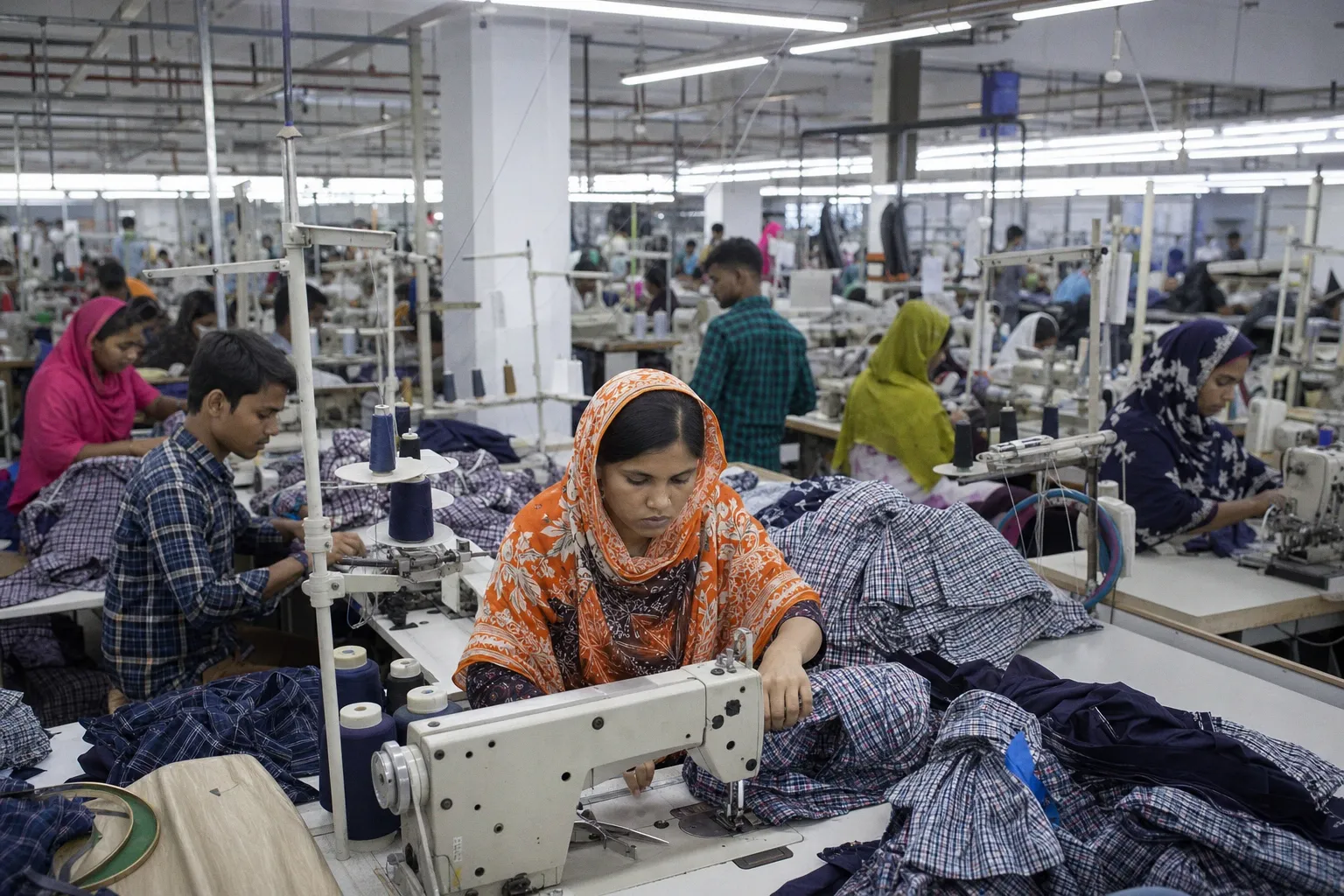
The retention signals continuity in a fiscal instrument that has anchored the country's largest export engine through successive cycles of demand contraction and competitive pressure.
Incentive architecture preserved
The decision locks in the existing rate structure across the 43 qualifying sectors rather than introducing a mid-cycle revision. For the readymade garment sector — which historically absorbs a significant share of disbursed cash assistance — the carry-over of rates provides budget certainty for exporters operating against thin margins and persistent currency volatility.
Incentive mechanisms of this kind function as a fiscal offset against structural cost differentials with competing manufacturing geographies, where input pricing, logistics infrastructure, and bilateral trade arrangements frequently tilt the competitive field. Holding the rate schedule static through FY 2026-27 effectively extends the government's implicit guarantee that the program will not be recalibrated midstream.
Macroeconomic backdrop
Bangladesh's external earnings remain disproportionately concentrated in apparel, making the stability of the cash incentive schedule a direct variable in the balance of payments calculus. The program was originally calibrated to compensate for tariff disadvantages and rising compliance costs associated with sustainability standards in destination markets. Retention, therefore, is less a concession than a continuation of an existing fiscal commitment.
Separate regional reporting frames the wider competitive environment: Vietnamese trade coverage has underscored the necessity of supporting industry clusters for global supply chains, while Chinese supply chain executives are, according to WWD, prioritizing nearshoring and friendshoring strategies. Read together, these signals position Bangladesh's incentive retention as a defensive posture rather than an expansionary one — preserving a fiscal lever rather than deploying a new one.
What to monitor
The carry-over decision defers, rather than resolves, questions about the long-term trajectory of the incentive regime. Several variables will determine whether the current rate structure remains adequate: the pace of post-LDC-graduation trade preference erosion, the evolution of bilateral sourcing strategies among major buyers, and the fiscal cost of the program as a share of total export receipts.
For smaller RMG units building direct-buyer channels, the wider diversification calculus now extends beyond traditional compliance to digital infrastructure — including WooCommerce store setup and performance tuning — though such tools remain supplementary to the core policy framework.
Stakeholders should track the annual export earnings target, any revisions to the qualifying sector list, and disbursement timelines, each of which will indicate whether the incentive apparatus is being treated as a transitional bridge or a structural fixture in Bangladesh's export architecture.