Intel and Fortinet Partner to Build Next-Generation Security Processors
According to the Financial Times, Intel and Fortinet have announced a strategic collaboration to develop Fortinet Security Processor 6, or SP6, combining Fortinet’s security-processor design with…
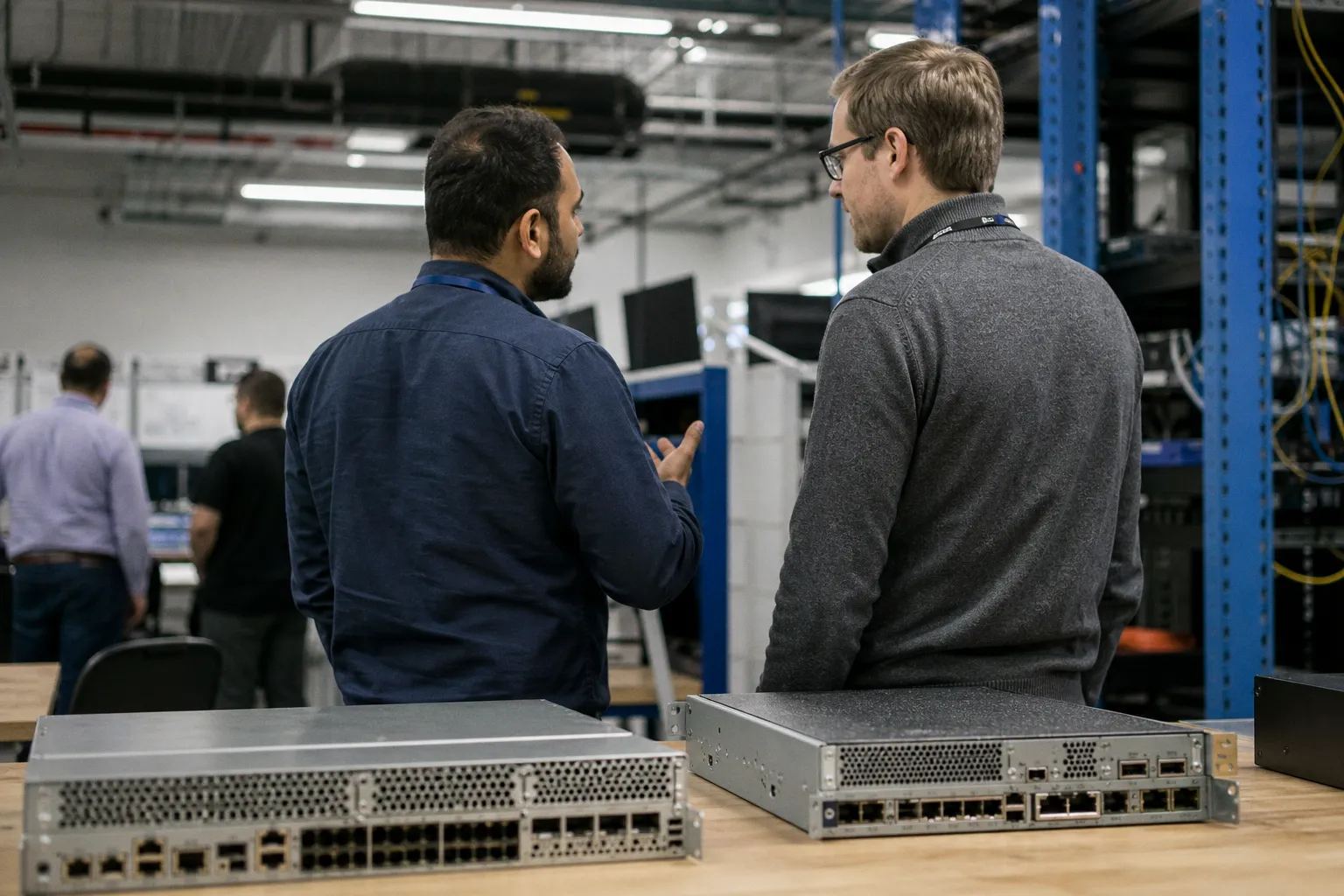
According to the Financial Times, Intel and Fortinet have announced a strategic collaboration to develop Fortinet Security Processor 6, or SP6, combining Fortinet’s security-processor design with Intel’s semiconductor design, packaging and manufacturing capabilities. The commercial significance lies less in a new product claim than in the effort to bring performance, manufacturing capacity and supply-chain diversification into the same security-infrastructure programme.
For enterprises assessing network-security platforms, the announcement is a reminder that the processor behind an appliance is no longer a purely technical component. It can determine the availability of hardware, the pace at which security services are added and the degree of concentration embedded in a vendor’s supply chain.
A semiconductor arrangement with a security objective
Fortinet’s SP6 is being developed as a purpose-built security processor, drawing on the company’s existing ASIC expertise and Intel’s ecosystem intellectual property, disaggregated semiconductor-design experience and advanced packaging solutions. The companies say the objective is a highly integrated processor capable of supporting increasingly sophisticated security services alongside demanding organisational performance requirements.
The arrangement is intended to accelerate Fortinet’s long-term ASIC roadmap while expanding the performance and range of services available through its security infrastructure. Intel, meanwhile, positions its role across design, packaging and manufacturing rather than solely as a component supplier.
That distinction matters. In the security market, proprietary processors are frequently part of a vendor’s differentiation, particularly where inspection, networking and security operations must operate at scale. But the benefits of a tightly integrated architecture depend on its production chain remaining sufficiently flexible when component availability or manufacturing conditions change.
Supply-chain assurance moves into the procurement case
The companies also state that the collaboration should improve the resilience and diversity of Fortinet’s global supply chain. This is the more material element for corporate buyers: resilience is being presented not as a peripheral logistics matter, but as part of the assurance surrounding critical cyber-security infrastructure.
The evidence available does not specify manufacturing volumes, production locations, delivery schedules or customer commitments. Accordingly, organisations should not treat the announcement itself as proof of near-term capacity or of a change to existing Fortinet deployments. Procurement teams will need to establish which future products incorporate SP6, what the transition path is, and whether supply-chain assurances are reflected in contractual terms rather than only in corporate strategy.
The broader market context supports that caution. Recent reporting has focused on supply-chain security networks, agricultural logistics technology and the pressures facing global supply chains across multiple fronts. Intel and Fortinet’s initiative sits within that wider shift: technology suppliers are increasingly seeking bilateral leverage over component design, manufacturing and availability rather than relying on a single stage of the chain.
What the market should monitor
The immediate measure of the collaboration will be execution. Intel and Fortinet have said they will explore further opportunities across semiconductor technology, manufacturing and the infrastructure underlying future cybersecurity innovation. The relevant milestones will therefore be concrete product integration, manufacturing continuity and whether the promised processor architecture delivers greater service richness without creating a new dependency for customers.
For Bangladesh-based enterprises and service providers purchasing security infrastructure, the practical question is not whether SP6 is technologically ambitious. It is whether vendors can document lifecycle support, hardware availability, update capability and supply-chain assurance across the full deployment period.
The issue also extends beyond security appliances. As AI-enabled systems reach institutional workflows—from network operations to teacher tools in global edtech—the reliability of the underlying semiconductor and infrastructure chain becomes a procurement variable, not merely a manufacturer’s operational concern.