Global Supply Chain Shift: Why Are Industry Giants in Southeast Asia and the US Opting for Chinese Partners?
Procter & Gamble has reportedly added Cainiao to its global warehousing and logistics automation partner list, a move that places a Chinese logistics technology provider inside the operating architecture of one of the world’s largest FMCG supply chains.
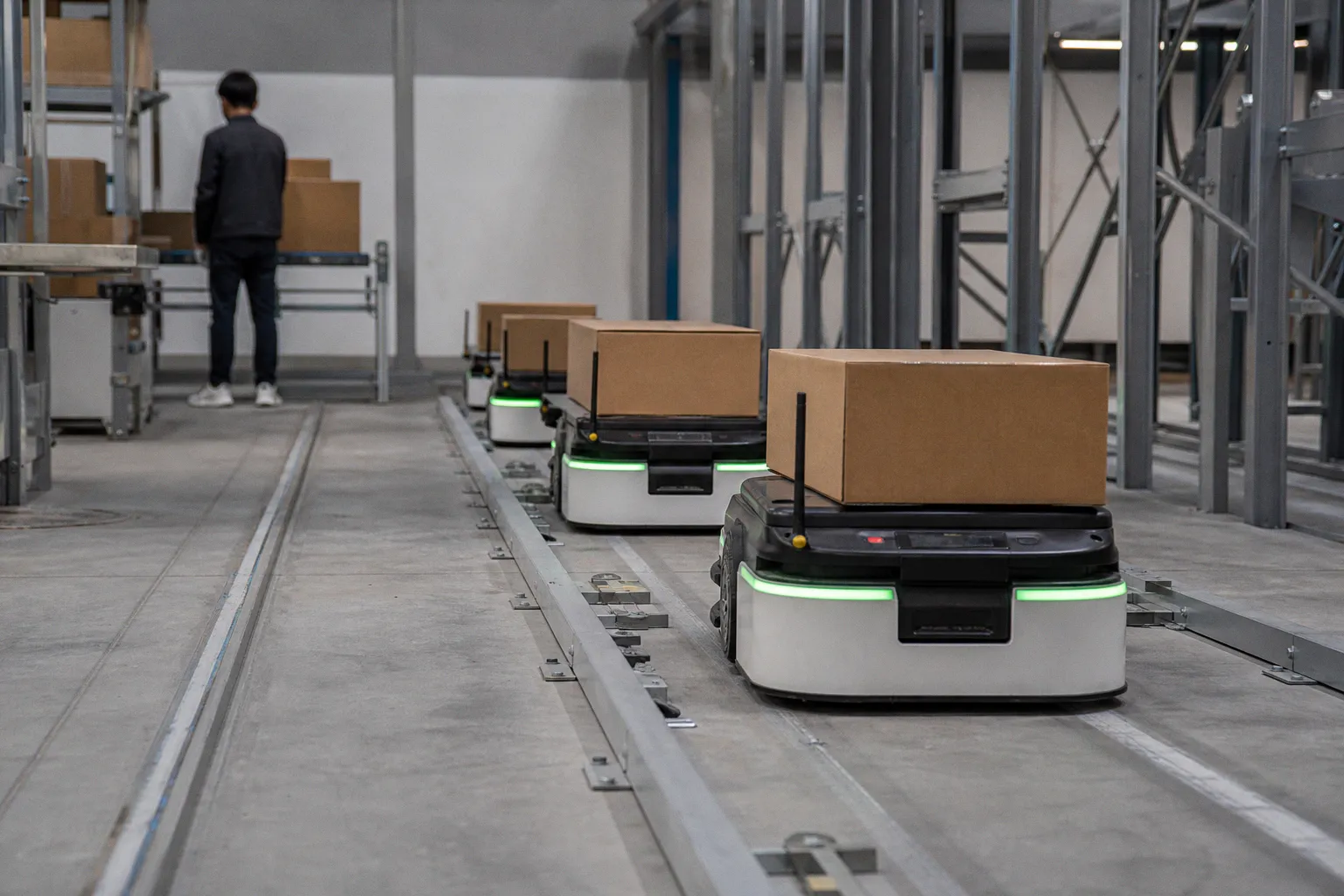
According to 36Kr, the cooperation covers warehouse modernisation across North America, Europe and Asia, while Cainiao has also secured an overseas warehousing order from CP AXTRA of Thailand’s CP Group. For Bangladesh’s exporters, retailers and logistics investors, the relevant signal is not geopolitical theatre; it is that large buyers are benchmarking execution capability, data integration and fulfilment flexibility against Chinese operating models.
Chinese logistics providers move from domestic scale to global contracts
The 36Kr report says Cainiao has become Procter & Gamble’s global strategic partner for warehousing and logistics automation. A smart warehouse in Guangzhou has already been put into operation, while an automation project in Canada has entered on-site construction. The report also cites official statements describing Cainiao as one of P&G’s largest warehousing and logistics automation service providers globally.
This matters because P&G is not a simple single-market retailer. The company manages thousands of SKUs across offline supermarkets, online direct-to-consumer channels and cross-border distribution, with warehouses spread across continents. At the end of 2024, it launched what the report calls a “Supply Chain Value Community” strategy, involving more than 60,000 retailers, distributors, raw material suppliers and service providers worldwide.
In institutional terms, the issue is not merely warehouse robotics. It is the attempt to reduce fragmentation inside a high-frequency consumer goods network where regional systems often operate as isolated data pools. The 36Kr material describes a familiar structural problem: Europe, the Americas, Asia-Pacific and Latin America may rely on different logistics partners, with limited real-time visibility across inventories. That produces a balance-sheet problem before it becomes a delivery problem — excess stock in one region and shortage in another.
Southeast Asia is part of the same test case
Cainiao’s reported cooperation with CP AXTRA adds a Southeast Asian dimension. CP AXTRA, under Thailand’s CP Group, owns supermarket brands including Lotus’s and Makro. The order, as described by 36Kr, is for overseas warehousing cooperation, not simply a domestic Chinese implementation.
For Bangladesh, the comparison is practical. Retail chains, FMCG distributors and export-oriented manufacturers face the same basic operating constraint: demand is becoming more fragmented while fulfilment channels are multiplying. A single logistics provider that can manage bulk B2B distribution but not scattered retail fulfilment leaves one gap; a consumer-facing fulfilment system that cannot support larger wholesale flows leaves another. The P&G and CP AXTRA examples suggest that procurement decisions are increasingly being made around integrated capability rather than legacy supplier geography.
The broader source cluster points in the same direction, though with limited detail. Yahoo Finance reported that the 4th China International Supply Chain Expo concluded in Beijing, while PR Newswire highlighted a CISCE service zone focused on logistics, finance and global connectivity. Separately, czapp.com flagged geopolitical tensions testing PET supply chain resilience. These snippets do not establish a single causal chain, but they do show that supply-chain redesign is being discussed simultaneously across logistics, financing and commodity-risk channels.
What Bangladeshi firms should verify before copying the model
The immediate lesson is not that every Bangladeshi company should select a Chinese partner. It is that vendor evaluation should become more technical. Management teams should examine whether a logistics automation provider can connect inventory data across regions, support both B2B and retail fulfilment, and operate under different market conditions without creating new data silos.
For garment exporters, FMCG importers, e-commerce platforms and supermarket operators, the risk is overcommitting to visible automation while underinvesting in systems integration. A warehouse can be modernised as a site-level asset and still fail as part of a network if data, replenishment and cross-channel allocation remain separated. The P&G case, as reported, is significant because the stated requirement is global coordination rather than isolated efficiency.
The next point to watch is whether these Chinese logistics providers convert individual contracts into a repeatable international standard. If they do, Bangladesh’s supply-chain market will face a clearer benchmark: not simply lower-cost warehousing, but faster inventory visibility, stronger fulfilment optionality and better risk buffering across channels. That would shift the competitive pressure from land, labour and storage capacity toward operating architecture — a more demanding, but more durable, basis for logistics investment.