Bangladesh Monsoon Crisis: IOM Expands Emergency Aid for One Million Affected
According to the International Organization for Migration, weeks of intense monsoon rainfall, flooding and landslides have affected more than one million people across 10 districts in Bangladesh…
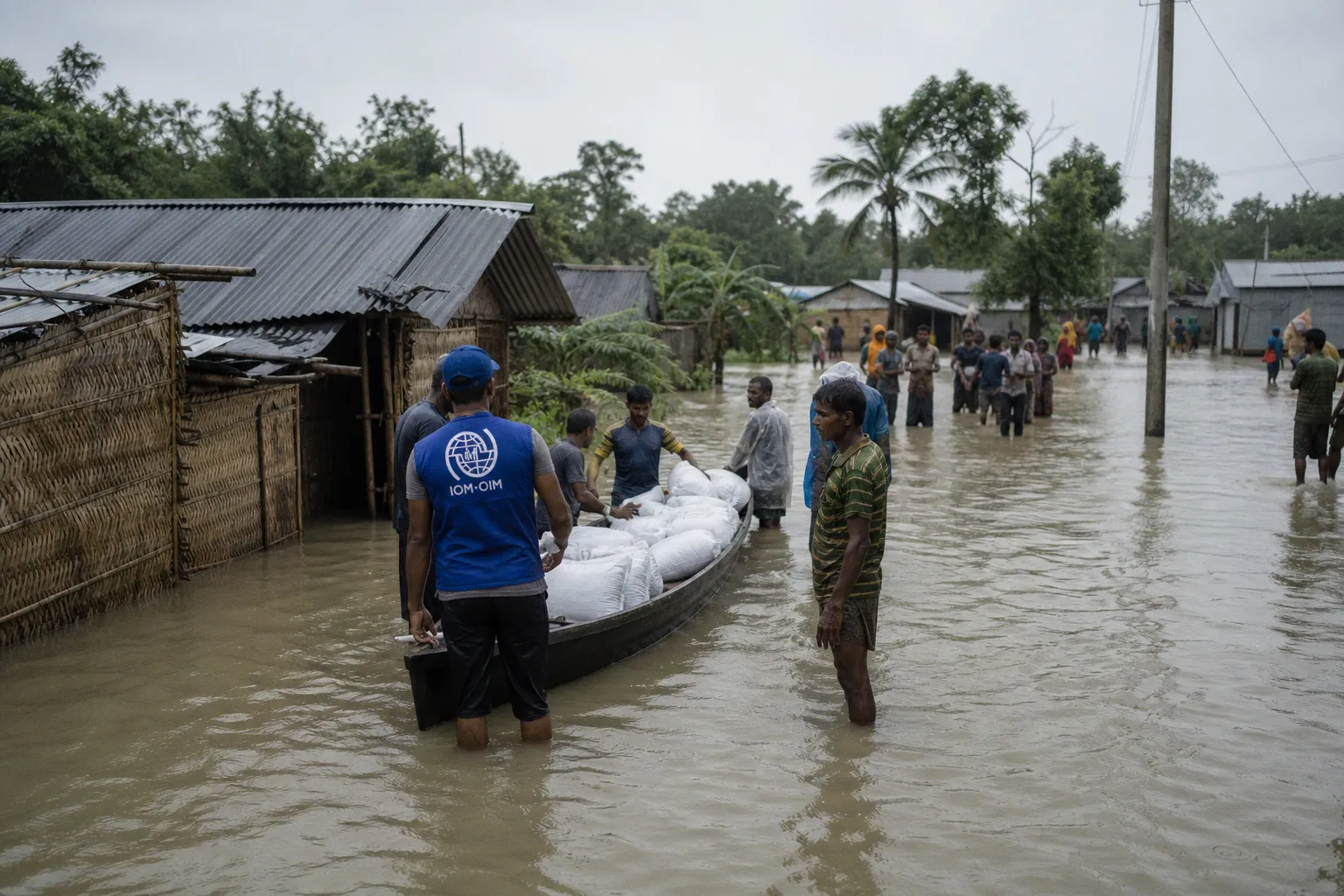
According to the International Organization for Migration, weeks of intense monsoon rainfall, flooding and landslides have affected more than one million people across 10 districts in Bangladesh, leading the agency to scale up emergency assistance. The available figure establishes the scale of exposure, but not yet the distribution of losses, infrastructure damage or the duration of disruption. For businesses and public authorities, that distinction will determine whether the episode remains principally a relief operation or develops into a broader local economic constraint.
A large affected population, with limited operating detail
IOM’s statement places the impact across 10 districts and identifies three overlapping hazards: sustained rainfall, flooding and landslides. This matters because the affected population is not a proxy for a single category of loss. Households, local transport links, agricultural activity, small commerce and service delivery can face materially different constraints even within the same district.
No sectoral breakdown has been provided in the information available. There is therefore no basis yet to quantify damage to crops, housing, roads, power supply, inventories or formal employment, nor to infer a national macroeconomic effect from the reported number alone.
The immediate institutional fact is more limited and more concrete: IOM has expanded its emergency assistance in response to the conditions. That signals a shift from monitoring to an active humanitarian response, while leaving the financing requirement, operational coverage and local delivery timetable unspecified.
The economic question is continuity, not headline scale
For the business community, the relevant near-term issue is continuity of access rather than a premature estimate of aggregate losses. Flooding and landslides can interrupt the movement of workers and goods, while prolonged rainfall can complicate the operation of facilities and local supply arrangements. Whether those risks translate into material commercial losses depends on their duration and geographic concentration—neither is established by the current information.
Companies with activity or supply exposure in the affected districts will need to distinguish confirmed disruption from precautionary assumptions. The report does not identify specific industrial areas, transport corridors or sectors, and it does not state whether businesses have halted operations. Treating the humanitarian figure as evidence of uniform economic shutdown would exceed the available facts.
For banks, insurers, traders and employers, the initial discipline is similarly procedural: assess direct exposure district by district, keep working-capital and delivery assumptions under review, and avoid converting incomplete field information into firm loss projections. The absence of such data is itself material in the first phase of a weather-driven disruption.
What the next disclosures will determine
The next relevant updates will be those that clarify where emergency assistance is being deployed and how conditions develop across the 10 affected districts. Additional information on access, displacement, infrastructure and local market functioning would establish the operational channels through which a humanitarian emergency could affect economic activity.
At present, the verified position is narrow: more than one million people have been affected by intense monsoon rains, flooding and landslides, and IOM is scaling up assistance. The market significance will depend less on the headline count than on whether subsequent reporting demonstrates persistent disruption to the systems that connect these districts to employment, trade and essential services.