Global Rights Groups Demand End to ICT Prosecution of Bangladeshi Journalists
The intervention, issued by a coalition including Human Rights Watch, frames the prosecutions as lacking a statutory foundation and inconsistent with Bangladesh's obligations under the International…
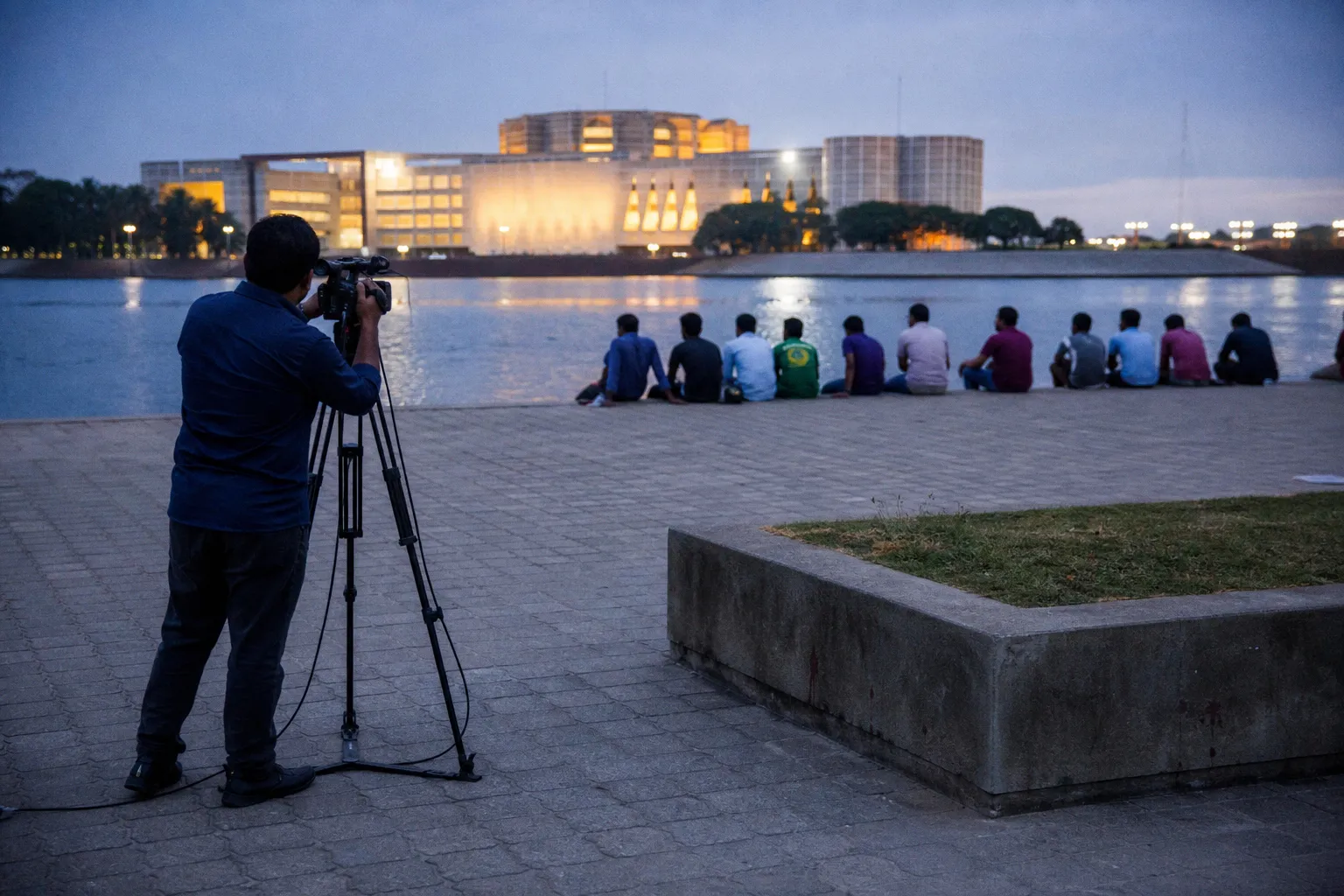
International press freedom and human rights organisations have called on the Government of Bangladesh to drop criminal charges against journalists Farzana Rupa and Mozammel Babu, whose detention under the International Crimes Tribunal has raised structural questions about the legal framework governing media activity in the country. The intervention, issued by a coalition including Human Rights Watch, frames the prosecutions as lacking a statutory foundation and inconsistent with Bangladesh's obligations under the International Covenant on Civil and Political Rights — concerns that carry direct implications for institutional credibility at a time when the country's governance trajectory is under sustained international scrutiny.
The ICT Track: Legal Mechanics
The ICT has deepened its investigation into Rupa and Babu in connection with their 2013 broadcast coverage of a security operation against a Hefazat-e-Islam protest at Shapla Chattar in Dhaka. Prosecutors have indicated the allegations centre on a current affairs programme presented by Rupa that purportedly "spread misleading information" about casualty figures from the May 5–6, 2013 operation. On 14 May 2026, the tribunal formally showed both journalists arrested in the case.
The rights coalition argues that criminalising editorial decisions on politically contested events — and characterising broadcast coverage as potential crimes against humanity — crosses a threshold with no basis in law. As of the statement's publication, lawyers representing Rupa and Babu had not received evidence or a charge sheet from the prosecution, a procedural gap that underscores the absence of a defined evidentiary foundation for the proceedings.
Parallel Detention and Procedural Overlap
The ICT proceedings compound an existing detention landscape. Rupa, Babu, Rupa's husband and fellow journalist Shakil Ahmed, and newspaper editor Shyamal Dutta have been held in pre-trial detention since August and September 2024 in connection with murder cases stemming from the July–August 2024 uprising. No charge sheet has been served in any of those cases, and the coalition notes there has been no explanation as to how journalistic reporting could be legally characterised as the crime of murder.
On 11 May 2026, Bangladesh's High Court granted Rupa and Ahmed bail in the majority of cases, but the Supreme Court's Appellate Division subsequently stayed that order. The ICT track now creates a parallel legal route within a court system where bail is rarely granted, effectively insulating the journalists' detention from any favourable ruling on the original murder charges. For stakeholders monitoring Bangladesh's judicial architecture, this procedural stacking — where successive legal channels neutralise bail decisions — represents a structural pattern worth tracking beyond the individual cases.
Institutional Signalling and Market Context
The coalition's statement invokes Prime Minister Tarique Rahman's manifesto commitment to end the persecution of journalists, urging the government to translate that pledge into concrete action. For investors and market participants, the case functions as a data point on prosecutorial discretion and the rule-of-law environment. The structural question is not whether the specific journalists are sympathetic figures, but whether the statutory framework permits criminal liability for editorial decisions — a threshold that, if crossed, recalibrates the risk calculus for any entity operating within Bangladesh's information ecosystem.
International bodies continue to develop broader governance frameworks that place human rights and institutional transparency at their core, making domestic precedents like this one increasingly visible to global counterparties. The coming weeks will clarify whether the ICT proceeds to formal charges or whether the government acts on the coalition's call — either outcome will signal the direction of Bangladesh's institutional architecture at a juncture when the country's economic credibility depends, in no small measure, on the predictability of its legal system.