Bangladesh Apparel Export Growth Stagnates as Global Market Share Slips
According to World Trade Organization data reported by The Business Standard, Bangladesh’s garment exports rose only 0.89% in 2025, reaching $38.82 billion from $38.48 billion a year earlier.
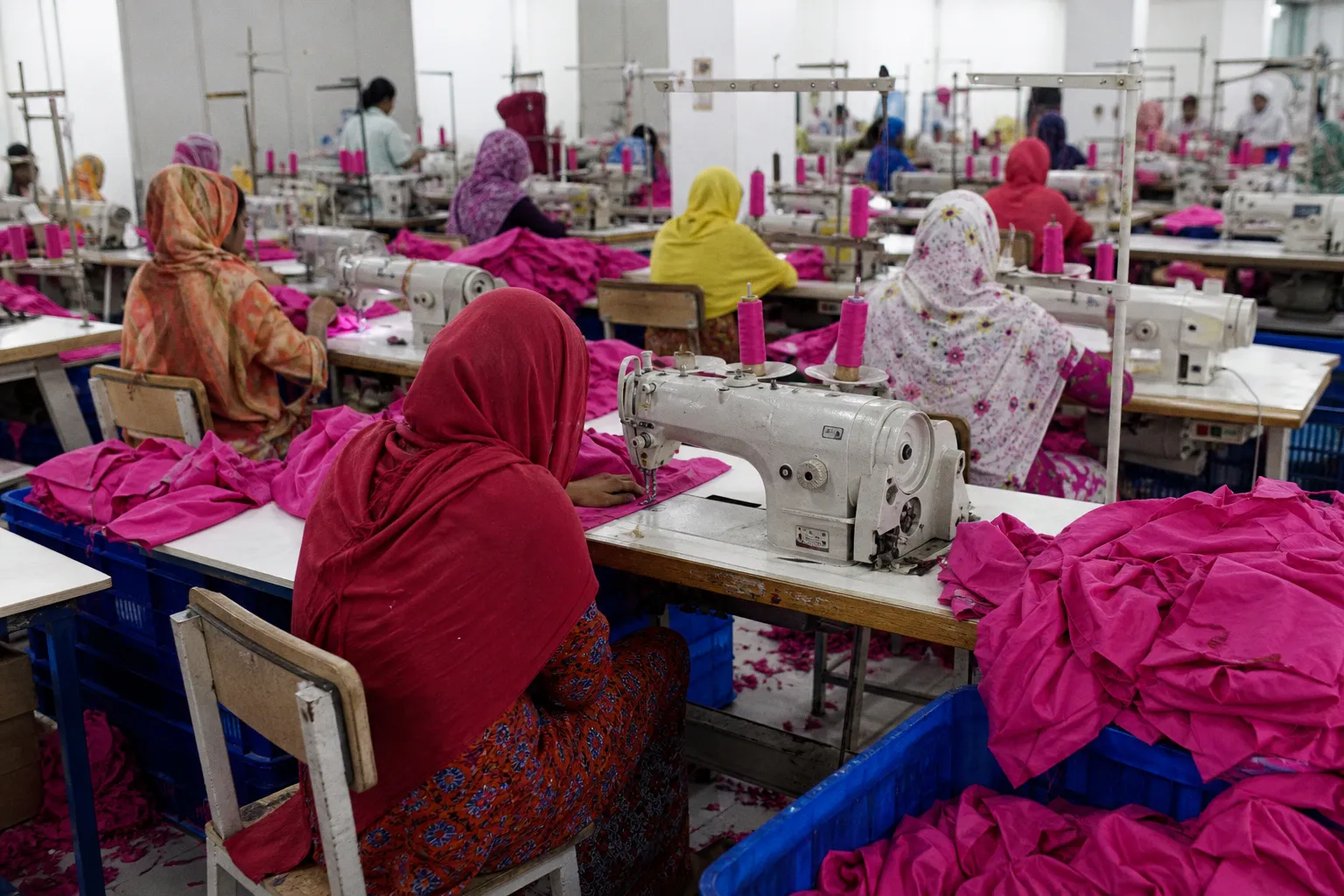
The country remains the world’s second-largest apparel exporter, but the figure marks a clear loss of relative momentum: global apparel trade expanded by 4.46%, while several regional competitors grew materially faster.
For Bangladesh, the issue is not the headline export total but the narrowing margin in a market where scale has historically provided negotiating weight with international buyers. Vietnam’s apparel exports grew 10.53% to $37.51 billion, leaving a gap of just $1.31 billion between the two exporters.
Market share is becoming the relevant measure
Bangladesh accounted for 6.76% of global apparel exports in 2025, down from 7% in 2024, according to the reported WTO figures. Vietnam’s share rose from 6.17% to 6.53% over the same period. The change is modest in percentage-point terms, but it has significance for a sector whose order allocations are often revised incrementally rather than through abrupt exits.
Cambodia recorded 16.88% export growth, while Pakistan, Indonesia and India also outpaced the global market, expanding by 6.83%, 5.79% and 5.47% respectively. China remained the dominant exporter despite a 4.92% decline in exports to $157.11 billion; its global share has fallen from 31.71% in 2021 to 27.35%.
The data therefore indicate that diversification away from China is continuing, but Bangladesh is not securing a proportionate part of that shift. Textile Today has separately pointed to Cambodia’s diversification as a factor in its apparel-sector advance, rather than low labour costs alone.
Growth volatility limits planning capacity
Bangladesh’s apparel exports grew 27.64% in 2022, fell 21.49% in 2023, and recovered by 7.23% in 2024 before slowing to less than 1% in 2025. Such variation complicates investment decisions across factories, suppliers and lenders: a large export base can preserve aggregate revenue while still offering limited confidence about incremental order flow.
Industry representatives cited by The Business Standard identified energy shortages, high borrowing costs, political uncertainty and weaker investment in manufacturing capacity as constraints on competitiveness. These are not short-term marketing variables. They affect delivery reliability, financing costs and the ability of producers to take on higher-value or more complex orders.
The commercial risk is that buyers reduce Bangladesh’s allocation gradually and distribute the difference across competing sourcing hubs. Once supplier relationships, production lines and logistics routines are established elsewhere, recovering those volumes may require more than price concessions.
The next test is competitiveness, not volume alone
The 2025 data do not signal a collapse in Bangladesh’s apparel exports. They show that the country’s export engine is expanding more slowly than the market it serves, while Vietnam and other Asian suppliers are gaining share. For policymakers, the relevant question is whether the statutory and operating framework can reduce the cost and reliability disadvantages identified by exporters.
For manufacturers and investors, headline export values should be read alongside market-share movement, energy availability, credit conditions and capacity investment. That distinction will also matter to market participants assessing the IG Group Holdings outlook and business model for global traders, where exposure to export-sensitive economies is shaped less by one annual figure than by persistent shifts in competitiveness.
The next WTO release will show whether 2025 was a temporary pause after an uneven recovery or the beginning of a more durable redistribution of apparel sourcing within Asia.