Textile exhibition with over 2,000 global brands participating underway in Pakistan’s Lahore
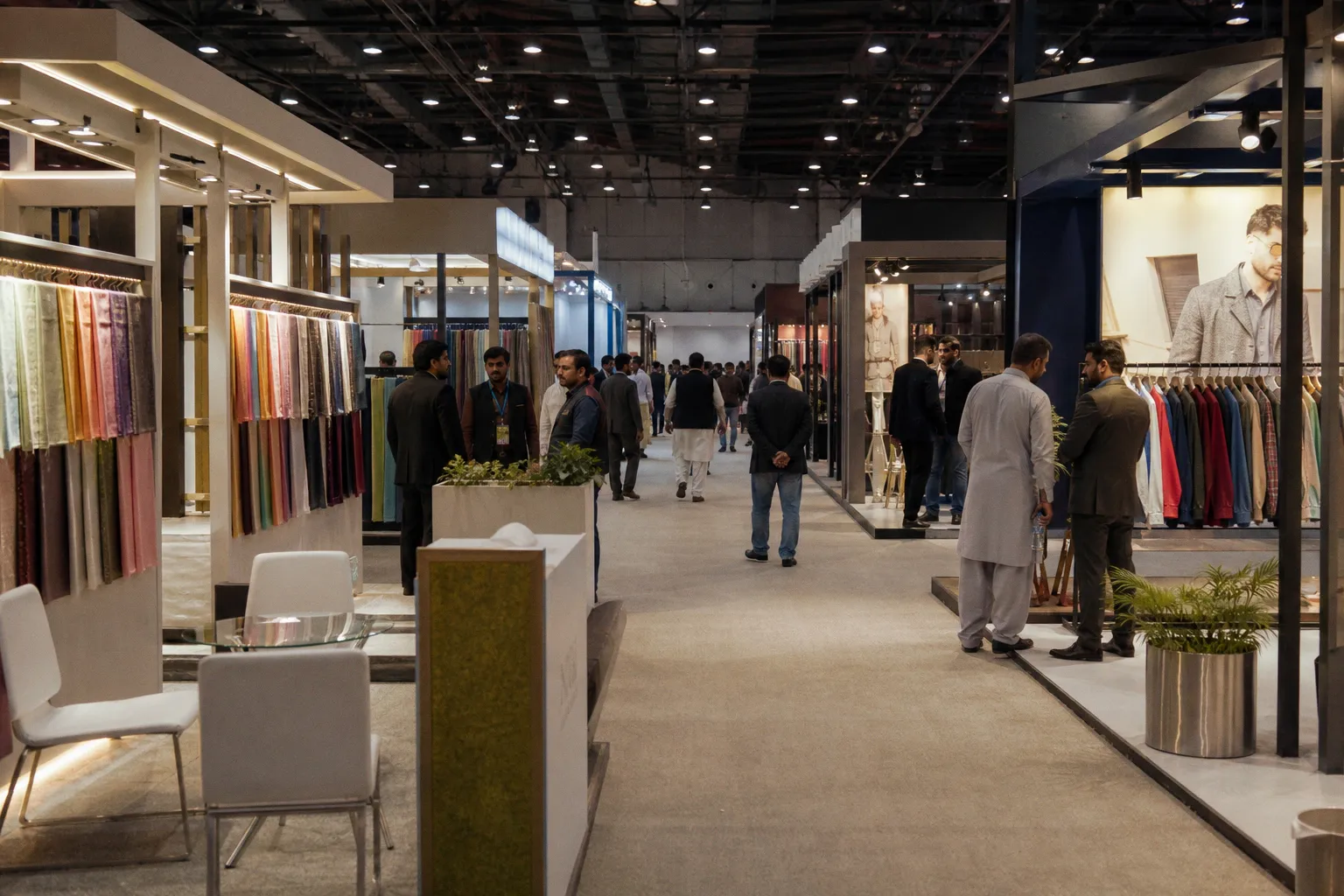
The 32nd Textile Asia International Exhibition 2026 is underway in Lahore, with state media cited by Arab News reporting participation by more than 2,000 international brands, over 425 companies and official delegations from more than eight countries.
For Bangladesh’s apparel and textile supply chain, the signal is not the exhibition itself but the competitive direction it reflects: regional producers are using machinery, technology transfer and value-added manufacturing platforms to reposition export capacity.
Lahore puts machinery and value addition at the centre
The exhibition opened on July 4 and was scheduled to run until Sunday in Pakistan’s eastern city of Lahore, according to the report. Its stated focus covers textile and garment machinery, clothing textiles accessories, raw material supplies, textile dyes and chemicals, and other industry-linked sectors.
Official delegations reportedly include China, Türkiye, Germany, Italy, Japan, South Korea, Malaysia and Russia. The event is being organised by Ecommerce Gateway Pakistan and supported by the Special Investment Facilitation Council, described in the report as a hybrid civil-military government body formed to attract international investment into priority sectors.
For Bangladesh, this matters because the competitive field in textiles is increasingly being shaped upstream: machinery, fabric capability, process efficiency, chemicals, digital systems and compliance-linked production models. Garment exporters do not compete only on final assembly; they compete on lead time, fabric access, reliability, and the ability to absorb buyer requirements without losing margin.
Pakistan’s export policy push is the relevant benchmark
Pakistan’s textile sector remains its largest export sector, earning $17.97 billion last year, according to data cited from the All Pakistan Textile Mills Association. The report also states that textiles comprise 46 percent of Pakistan’s total manufacturing sector and provide employment to 40 percent of the country’s labour force.
Those figures explain why the exhibition is being framed not merely as a trade fair but as part of an industrial-policy setting. Arab News cited Radio Pakistan as saying the event is intended to create opportunities for investment, technology transfer, export growth and industrial development, while reinforcing Pakistan’s position as a competitive destination for the global textile industry.
The policy backdrop is also explicit: Pakistan’s commerce minister announced in August 2025 the finalisation of a five-year Textiles and Apparel Policy and a National Industrial Policy aimed at making the industry regionally competitive, removing trade barriers and supporting long-term export growth. Bangladesh’s exporters and policymakers should read that as a regional benchmark. When a competing producer aligns exhibitions, investment facilitation and sector policy, buyers and machinery suppliers receive a clearer institutional signal.
What Bangladesh firms should watch next
The parallel Eco Textile Conference 2.0, held alongside the Lahore exhibition, is reported to include discussions on green manufacturing, renewable energy, the circular economy and emerging global industry trends. These are no longer peripheral themes for apparel sourcing. They increasingly influence buyer due diligence, factory investment planning and the economics of upgrading.
A separate source in the evidence set, AD HOC NEWS, describes Taiwan-based Eclat Textile as a listed manufacturer focused on performance-oriented knit fabrics for sportswear, athleisure and functional apparel. Its model is built around specialty materials, brand collaboration, production efficiency, labour management and raw material sourcing. That is a useful reference point for Bangladesh’s industry because higher-value apparel is tied less to generic capacity and more to materials, co-development and delivery reliability.
Textile Today also reported that Intertextile Apparel in Shanghai highlighted new trends and innovations across three business-driven days, though the available evidence does not provide further detail. Taken together, the signals from Lahore, Shanghai and performance-fabric suppliers point in the same direction: regional textile competition is moving toward technology, sustainability language and value-added production.
For Bangladesh, the immediate task is not to overstate one exhibition in Pakistan. It is to track whether such platforms translate into machinery orders, fabric capability, energy transition investments and buyer commitments. Those indicators will show whether competitors are merely marketing industrial ambition or building the operational base that can alter regional apparel margins.