Mobile banking in Bangladesh: Why MFS growth matters
More than 220 million registered mobile financial services accounts in a country of roughly 170 million people is not a rounding error. It is the scoreboard.
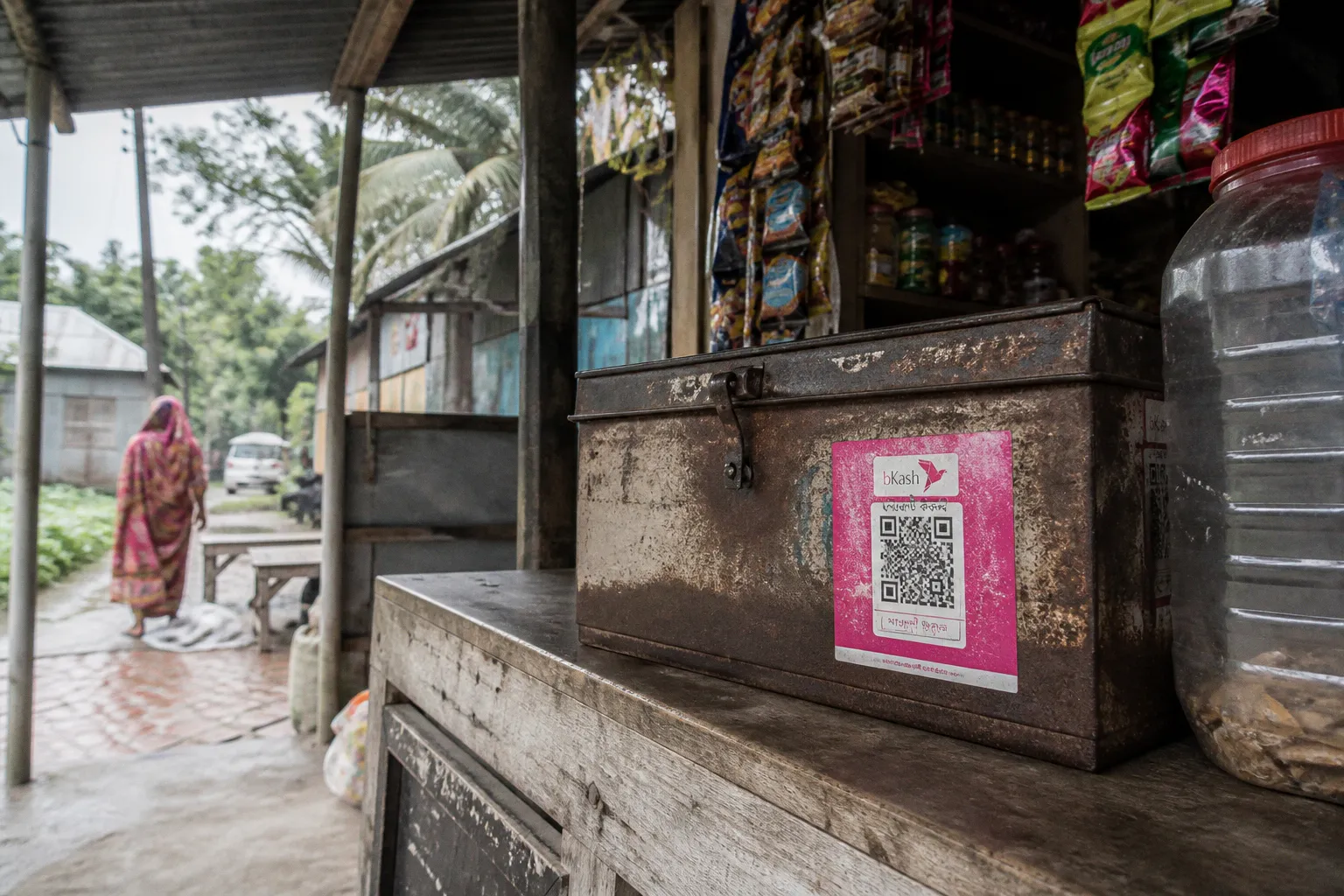
But the headline number can mislead. Registered accounts are not the same as active users. Cash has not been beaten off the pitch. And over 90% of MFS activity still sits in the familiar lanes of person-to-person transfers and cash-in/cash-out. That tells us two things at once: mobile banking in Bangladesh has already changed how money moves, and it has not yet completed the harder transition from digital access to a fully digital economy.
The scale of adoption: a big number, but not a finished game
Bangladesh’s MFS rise started as a distribution play. Banks could not cover every village, informal worker, small trader and migrant family with branches. Agents could. Phones could. Low-value transfers could. The system found its gap and attacked it hard.
Since bKash launched in 2011, MFS has become one of Bangladesh’s most effective pieces of financial infrastructure. Nagad’s arrival in 2019, backed by the Bangladesh Post Office’s reach, changed the pressure line. Rocket, the older bank-linked player from Dutch-Bangla Bank, remained part of the field. By early 2024, the country had 13 licensed MFS providers and more than 220 million registered accounts.
That number is often waved around as if it settles the argument. It does not. A player can be named in the squad and still sit on the bench. Account duplication is common. Dormant accounts exist. The exact active-versus-inactive split is debated because providers and observers do not always use the same definitions.
Still, the direction is not in doubt. MFS has given Bangladesh a working route around one of its oldest structural blocks: the distance between formal finance and everyday cash life. Wage earners send money home. Students pay fees. Small merchants receive payments. Utility bills move through phones. Urban consumers in Dhaka use wallets for ride-sharing, e-commerce and food delivery. Rural households use the same rails for remittance-like transfers from family members working in cities.
This is why the mobile banking Bangladesh story is not merely a fintech story. It is a distribution story, a labour-market story, and increasingly a state-capacity story.
The account count matters. The transaction mix matters more. Bangladesh has built the rails; now it has to move the ball through midfield, not just recycle it at the back.
The first phase was access. Get people into the system. Give them a wallet. Put agents within reach. The second phase is usage depth: merchant payments, bill payments, savings products, credit scoring, insurance, and interoperable transfers that do not force users to think like telecom engineers before moving 500 taka.
That second phase is harder. It needs trust, pricing discipline, regulatory patience and product design that respects how people actually handle money.
bKash, Nagad and the market shape: dominance, pressure, and the fight for the last mile
The MFS market in Bangladesh is not evenly spread. It would be inaccurate to pretend all 13 licensed providers carry the same weight. bKash remains the market leader, with a significant share of transaction volume and the active user base. Nagad has grown fast since 2019 and became the clearest challenger. Rocket remains relevant, particularly through its bank-linked legacy and established user pockets.
This matters because market structure affects pricing, agent behaviour, merchant acceptance and product innovation. In sport, shape decides options. A team with one dominant playmaker can control tempo, but it also becomes predictable if the opponent presses the passing lanes. Bangladesh’s MFS market has a similar tension: the dominant brands give scale and familiarity, while competition pushes fees, onboarding and new services.
| Parameter | bKash | Nagad | Rocket |
|---|---|---|---|
| Market position | Clear market leader with large active base and transaction share | Fast-growing challenger with broad public-sector-linked visibility | Established bank-linked MFS player |
| Launch marker | 2011, the mainstream starting gun for MFS adoption | 2019, launched by the Bangladesh Post Office | Earlier bank-led presence through Dutch-Bangla Bank |
| Core strength | Brand trust, agent network, merchant acceptance, everyday familiarity | Rapid account growth, aggressive reach, strong recognition | Legacy trust, banking connection, specific user segments |
| Main challenge | Keeping fees, fraud control and service reliability aligned at massive scale | Converting growth into durable high-frequency usage | Staying tactically relevant against larger wallet-first rivals |
bKash’s advantage is not just a logo on a phone screen. It is acceptance. Users go where other users are. Merchants accept what customers carry. Agents prioritise what moves volume. That network effect is the equivalent of territory: once established, it is difficult to win back.
Nagad’s rise put pressure on that comfort. The challenge is healthy for the market. A single-provider universe would be slower, more expensive and less inventive. But competition in MFS has to be watched carefully because the agent network is not a frictionless digital layer. It is physical, cash-heavy and incentive-driven. Agent commissions, liquidity management and consumer charges shape what users experience on the ground.
The average user does not judge MFS by policy papers. They judge it by whether the agent has cash, whether the transaction arrives, whether the fee feels tolerable, and whether a fraud call can be stopped before damage is done. That is the real match data.
The 1,500 crore BDT daily engine: what the money flow actually shows
Daily MFS transactions above 1,500 crore BDT should end any argument that mobile financial services are a side channel. This is now part of Bangladesh’s monetary plumbing.
The volume is powerful because it sits inside ordinary behaviour. MFS is not only used when a bank branch is closed or when an app offers a discount. It is used because people need to move small and medium sums quickly across a country where household income, work location and family obligations are often split across districts.
The strongest lanes are still familiar:
1. Person-to-person transfers. This remains the core move. Salary support, family transfers, emergency money, student expenses and small informal payments all run through this channel.
2. Cash-in and cash-out. The agent remains central. Digital money often begins as cash and ends as cash. That is not failure; it is the current formation.
3. Bill and fee payments. Utilities, education fees and service payments have expanded the usefulness of wallets beyond remittance-style transfers.
4. Merchant payments. Still not deep enough relative to the size of retail cash activity, but increasingly visible in Dhaka and other urban centres.
5. Platform-linked payments. Ride-sharing, e-commerce, food delivery and app-based services have trained a younger user base to treat wallets as normal.
The problem is that the transaction mix shows Bangladesh is still heavily dependent on entry-and-exit points. If a user cashes in, sends money, and the receiver immediately cashes out, the system has improved speed and safety but has not fully reduced the economy’s dependence on physical cash. That is a tactical gain, not total control.
Cashless transactions in Bangladesh will grow only when users have a reason to keep value inside the wallet. That means more merchants, better incentives, lower friction, and enough trust that people do not feel compelled to withdraw immediately. Trust is not built by slogans. It is built by failed transactions being resolved, fraud being punished, interfaces being understandable, and fees being transparent.
This is also where the startup ecosystem comes in. Dhaka’s fintech founders are not building in a vacuum. They build on rails created by MFS, telecom reach, smartphone adoption and digital identity systems. Payment acceptance helps e-commerce. Wallet history can help alternative credit assessment. Merchant payment data can support inventory finance. Salary disbursement can support formalisation for small businesses.
Globally, investors are still treating AI, payments and digital infrastructure as connected fields, not separate sidelines; the same pattern is visible in major funding cycles such as the AI investment surge reshaping Britain’s economy. Bangladesh does not need to copy that playbook exactly, but it cannot ignore the direction: capital follows infrastructure that can scale.
For Bangladesh, MFS is that infrastructure. Not glamorous. Not always clean. But central.
Regulation: Bangladesh Bank as referee, not spectator
The Bangladesh Bank regulates the MFS sector, including transaction limits, agent commissions and security protocols. That role is not decorative. In a system moving more than 1,500 crore BDT a day, weak oversight would be an open invitation to fraud, money laundering, consumer abuse and systemic distrust.
The regulator’s job is difficult because MFS sits between banking, telecom-style distribution and retail cash handling. Push too hard, and innovation slows. Step back too far, and the market rewards aggressive behaviour before the damage becomes visible. The referee cannot decide the match, but must stop dangerous tackles early.
Interoperability is the next major test. During 2023-2024, implementation between MFS providers and banks started moving from policy aspiration toward practical reality. Full interoperability matters because closed loops are inefficient. Users should not have to maintain multiple wallets simply because one relative uses bKash, another uses Nagad and a merchant prefers a bank transfer.
The logic is simple:
- Wallet-to-wallet transfers across providers reduce user friction and weaken artificial barriers.
- Bank-to-MFS and MFS-to-bank links help formal finance and digital wallets support each other rather than compete blindly.
- Merchant acceptance across networks can make small retailers more willing to accept digital payments.
- Transparent settlement rules reduce disputes and operational confusion.
- Security standards across the field prevent weak providers from becoming the soft channel for fraud.
Interoperability is not a magic switch. Fees still matter. User education matters. Complaint handling matters. But without it, Bangladesh risks building parallel payment islands. That would be poor tactics: too many players standing in the same channel, not enough movement between lines.
Regulation has to be tight enough to protect users and loose enough to let the attack develop. That balance is where Bangladesh Bank will win or lose the next phase.
Security is the other pressure point. It would be reckless to claim MFS is immune to fraud. It is not. Social engineering, PIN theft, fake calls, mistaken transfers and agent-side irregularities remain real risks. The more MFS penetrates low-literacy and first-time finance populations, the more fraudsters will press.
The answer is not to scare users back into cash. Cash has its own risks. The answer is better authentication, faster dispute response, stronger agent monitoring and repeated user education in plain language. Not posters no one reads. Not legalistic warnings. Direct instructions: do not share PINs, verify numbers, use official channels, report immediately.
Financial inclusion: the win is real, but uneven
MFS has reduced the practical distance between millions of Bangladeshis and formal finance. That is the cleanest win on the board.
A bank account traditionally required paperwork, time, confidence and proximity. MFS lowered the entry bar. A phone number, an agent, a national identity process, and the user is closer to the formal system than before. For migrant workers inside the country, garment workers, small traders, domestic workers, students and rural families, that shift is not abstract. It saves travel time. It reduces hand-carried cash. It makes small transfers routine.
But inclusion is not just onboarding. A user who only receives money and cashes out remains partly included. A user who can save, pay, borrow responsibly, insure against risk and build a financial record is more deeply included. Bangladesh has made the first move. The next move is product depth.
This is where the sector should be judged harder. Not by app downloads. Not by promotional campaigns. By whether users can do more with less friction.
There are several areas where the market has room to advance:
1. Merchant payments outside elite urban corridors. Dhaka adoption is one thing; routine acceptance in small towns is another. The agent network proved Bangladesh can scale physical-digital distribution. Merchant acceptance now needs the same intensity.
2. Women’s control over accounts. Household-level access does not always mean individual financial agency. Product design and education must recognise that phone access, privacy and social norms affect usage.
3. Small business finance. Transaction histories could help lenders assess micro and small merchants. But this requires careful credit discipline. Bad digital lending would damage trust fast.
4. Lower-friction savings. Wallet balances often stay low because users see MFS as a transfer tool. Savings products must be simple, safe and clearly priced.
5. Better complaint resolution. Nothing kills trust like a lost transaction and a user being passed from agent to hotline to branch with no answer.
Bangladesh should not pretend mobile banking has replaced traditional banking. It has not. It complements it. That is the more accurate and more useful view. Banks still matter for deposits, credit, compliance, larger enterprise finance and institutional trust. MFS matters for reach, frequency and low-value movement. The better future is not one beating the other. It is a connected system where wallets, banks, merchants and users move value cleanly.
Smart Bangladesh: from digital transfers to digital economic behaviour
MFS growth is a pillar of the Smart Bangladesh vision because it attacks the cash problem from the ground up. Government ambitions around digital public services, cashless transactions and formalisation need payment rails that ordinary people already use. MFS provides those rails.
But ambition has to survive contact with behaviour. People do not become cashless because a policy document says so. They do it when digital payment is faster, cheaper, safer or more rewarding than cash. At present, MFS often wins on speed. It does not always win on cost. It does not always win on merchant availability. It does not always win on trust after a bad experience.
The next phase of mobile financial services in Dhaka and across Bangladesh will be decided by three practical battles.
The fee battle
For low-income users, small fees are not small. A charge that looks minor in a fintech presentation can change behaviour at the counter. If digital payments feel expensive, users will cash out. If merchant payments carry hidden costs, shops will resist. Pricing must keep the network sustainable without punishing frequency.
The merchant battle
Cash dominates because it is universally accepted. MFS will reduce cash dependence only when merchants see digital acceptance as useful, not merely fashionable. That requires simple QR acceptance, predictable settlement, low dispute risk and integration with basic business tools.
A tea stall and a grocery shop do not need a corporate dashboard. They need confirmation, liquidity and confidence that they are not losing margin.
The data battle
Transaction data can improve credit, insurance and service targeting. It can also be misused. Bangladesh’s fintech sector has to handle this carefully. Users who entered MFS for convenience should not be turned into raw material for opaque scoring without safeguards. Data can widen inclusion, but only if consent, security and accountability keep pace.
This is the part of the match where discipline matters. A fast attack is useful until it loses shape.
What MFS growth means for startups and the wider tech economy
For Bangladesh’s startup ecosystem, MFS is not just a payment option at checkout. It is foundational infrastructure. E-commerce, logistics, ride-sharing, digital health, edtech, agritech and gig-work platforms all depend on the ability to collect, disburse and reconcile payments.
In Dhaka, where app-based services have trained consumers to expect fast settlement, MFS has become part of the operating system. For startups outside Dhaka, the agent network remains just as important as the app layer. Bangladesh is not a pure smartphone-card-market economy. It is a hybrid economy, and successful companies understand that.
The practical implications are clear:
- A startup serving mass users cannot design only for bank cards.
- Rural growth strategies must account for agent liquidity and cash-out habits.
- Customer acquisition is easier when payment options match existing behaviour.
- Refunds and failed payments are not back-office details; they are trust events.
- Partnerships with major MFS providers can accelerate reach but may create dependency.
This is where founders need less theatre and more match analysis. Payment friction is conversion loss. Failed refunds are churn. High cash-out dependence affects unit economics. Fraud controls shape support costs. These are not small operational details; they decide whether a startup scales or stalls.
Bangladesh IT exports, software outsourcing and digital services may sit in a different lane from MFS, but they benefit from the same national shift: more digital trust, more digital transactions, more users comfortable with app-based services. MFS has done some of the hard cultural work. It taught millions that money can move through a handset. That lowers the psychological barrier for the next wave of digital services.
The blunt verdict: Bangladesh has the rails, now it needs better movement
Mobile banking in Bangladesh has already delivered a major structural gain. More than 220 million registered MFS accounts, daily transactions above 1,500 crore BDT, and a competitive field led by bKash and Nagad show that the sector is no longer experimental. It is national infrastructure.
The weak point is not scale. It is depth. Too much activity still circles around P2P and cash-in/cash-out. That is useful, but it is not the full promise of a cash-light economy. The next phase needs interoperability that actually works, merchant payments that make sense for small businesses, fraud controls that protect ordinary users, and pricing that does not push people back to cash.
Administrative excuses will not do. Bangladesh has had the breakthrough run. Now it needs the final pass: from access to meaningful usage, from wallet registration to economic participation, from digital transfer to digital finance. If the sector gets that right, MFS will not just support Smart Bangladesh. It will be one of the few systems already fit to carry it.