Bangladesh Economic Growth Slumps to 2.2% Amid Industrial Contraction
Provisional data from the Bangladesh Bureau of Statistics puts GDP growth at 2.22 percent for the January–March quarter of FY2025-26 — roughly half the 4.53 percent recorded in the same period a year earlier.
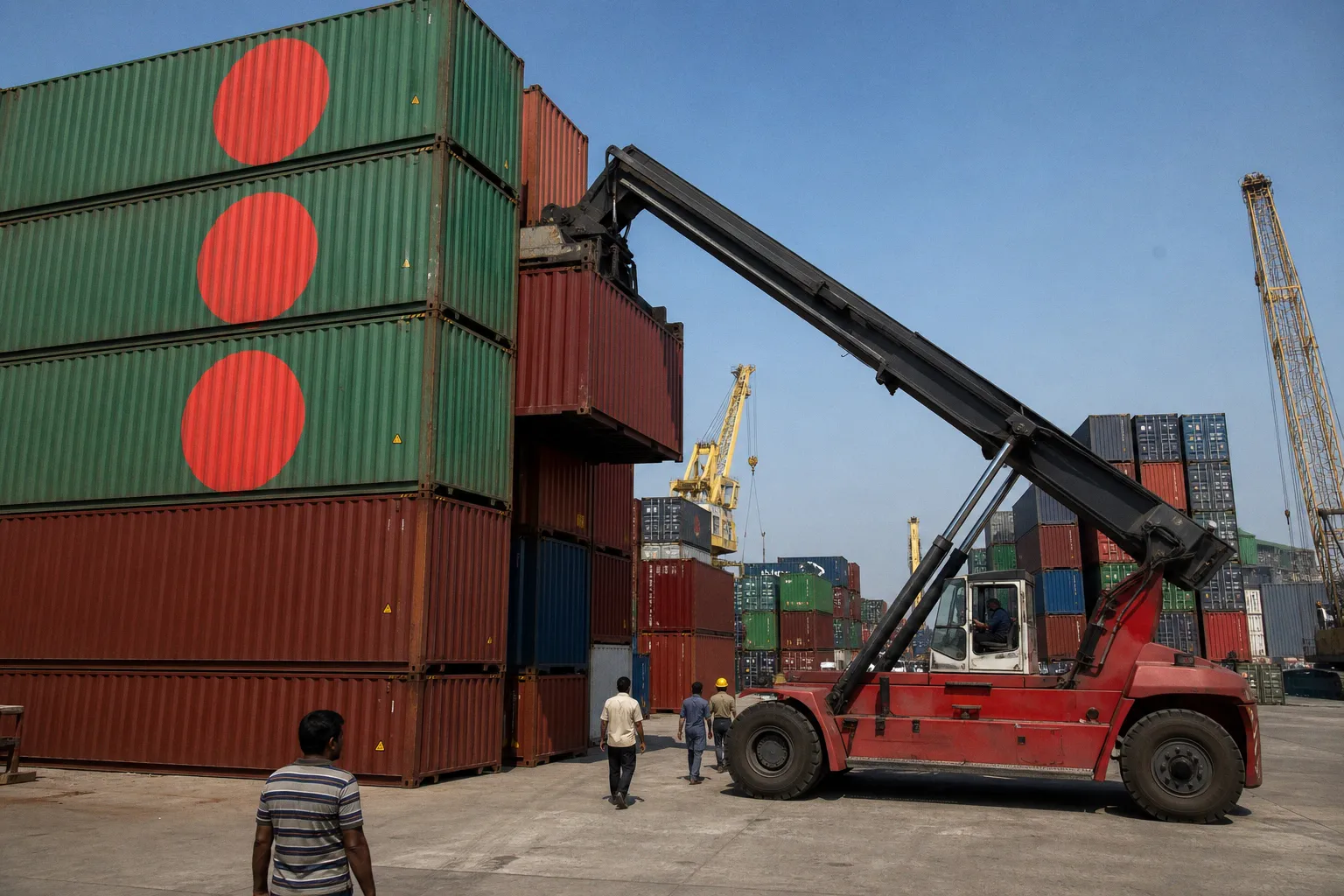
The industrial sector, the country's principal growth engine, contracted by 0.28 percent, while services and agriculture both posted marked decelerations. The figure constitutes the lowest quarterly print since Q4 of FY25 and raises questions about the achievability of the BBS's own full-year provisional estimate of 4.14 percent.
Industrial output flips negative
The 0.28 percent contraction in industrial production during the January–March period reverses the expansion posted in the corresponding quarter of the previous fiscal year. Manufacturing activity — heavily weighted toward textiles and downstream processing — has been under pressure from softer external demand and persistent energy-supply constraints. The services sector, which accounts for more than half of national output, slowed to 3.52 percent from 7.32 percent a year earlier, signalling that weakness is not confined to industry but cuts across the broader economy.
Agriculture, often a buffer during industrial downturns, offered limited relief: growth in the sector eased to 1.74 percent, down from 4.61 percent in the same quarter of FY25. The simultaneous softening of all three pillars of the economy points to a cyclical rather than sector-specific contraction.
RMG exports mirror the industrial drag
The broader industrial slowdown aligns with stagnation in the ready-made garment sector, Bangladesh's largest export earner. Export Promotion Bureau data show RMG shipments totalled $19.34 billion in the first half of 2026, a year-on-year decline of 0.63 percent. Woven garments edged up 0.68 percent, but knitwear contracted 1.80 percent, reflecting margin compression and shifting buyer sourcing strategies across the global apparel market.
The Prime Minister's Office has directed authorities to identify and remove obstacles to garment-industry growth, according to state news agency Bangladesh Sangbad Sangstha. The directive, however, offers no specifics on fiscal incentives, energy allocation, or regulatory streamlining — the structural levers most relevant to exporters operating on thin margins.
What the Q3 figure implies for FY26
The 4.14 percent full-year growth projection issued by the BBS now requires a substantial acceleration in the final quarter of FY26. Reaching that target would demand industrial output returning to expansion and services rebounding to near-7-percent territory — conditions that, absent a decisive improvement in energy availability and export orders, appear ambitious. Investors and policymakers tracking Bangladesh's macro trajectory should watch next quarter's industrial production index and RMG order books for early confirmation of whether the current deceleration is a trough or the beginning of a flatter growth path.