Bangladesh Central Bank’s 3% Trade Finance Cap Risks Marginalizing Local Lenders
Trade Finance Global reports that a 3% cap on foreign-currency trade financing set by Bangladesh’s central bank could displace local banks from parts of the market.
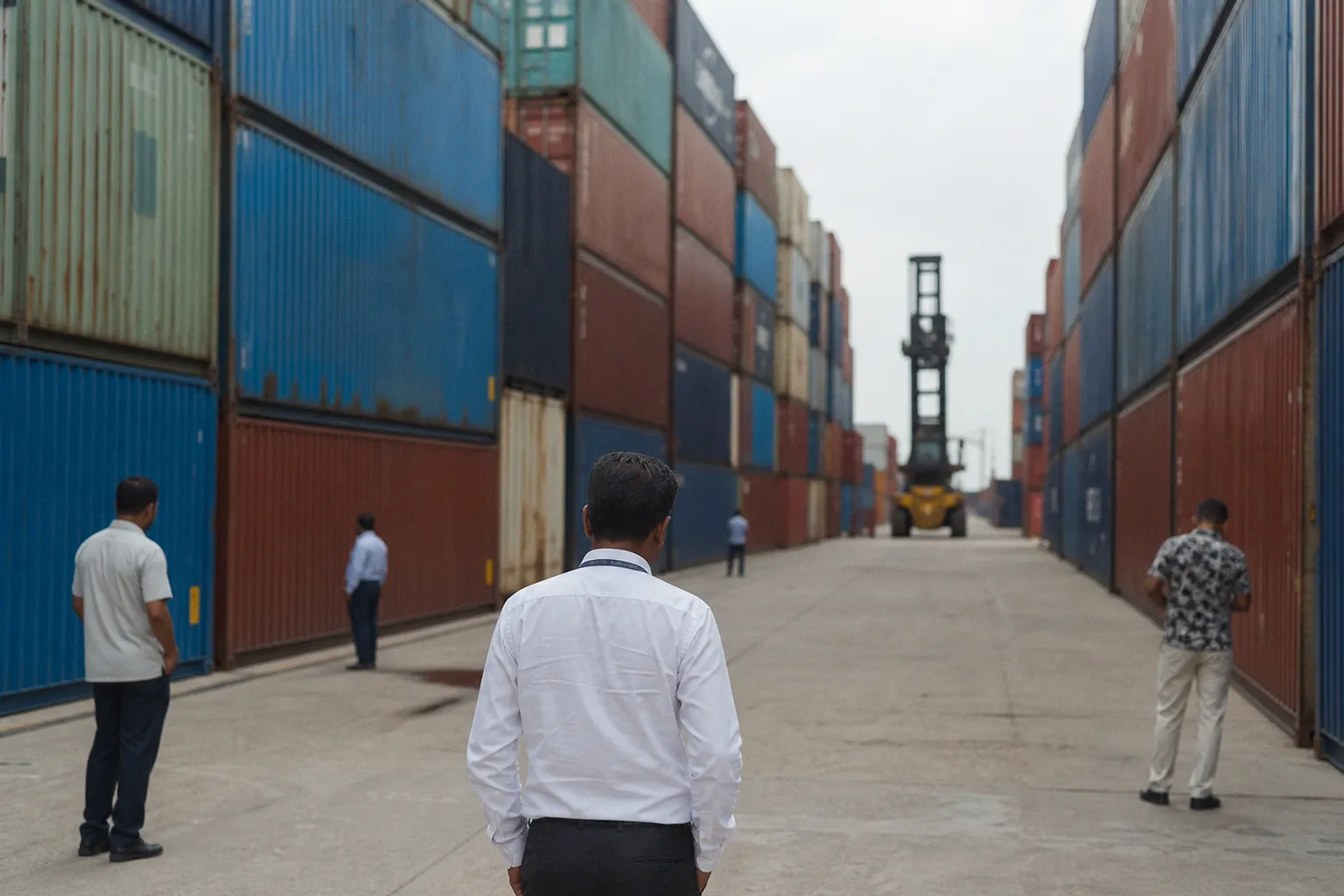
The report’s available headline provides no further operational detail, but the issue matters because trade finance is not a peripheral banking activity: it is the mechanism through which importers, exporters and their counterparties convert commercial contracts into settled cross-border transactions.
The immediate analytical constraint is that the published item, as available, does not identify the transactions covered by the cap, its implementation timetable, or the statutory and supervisory terms governing its application. Those omissions matter. A percentage ceiling can alter bank behaviour only through its precise basis of calculation, the relevant foreign-currency exposure and the scope of eligible financing.
A constraint on intermediation, not merely pricing
The significance of the reported 3% threshold lies in the potential reallocation of trade-finance business rather than in the numerical level alone. If local lenders cannot accommodate financing structures demanded by their corporate clients within the applicable limit, transactions may migrate to institutions with a different capacity to intermediate foreign-currency flows.
That does not establish that such a shift will occur, nor does the available report quantify any prospective loss for domestic banks. It does, however, place regulatory design at the centre of a sector where execution capacity, correspondent relationships and access to foreign currency determine whether a lender remains part of a client’s supply chain.
For importers and exporters, the practical issue is not the headline figure in isolation. It is whether their banks can continue to process the specific trade instruments and foreign-currency requirements attached to existing contracts. Until the central bank’s operative terms are clear, businesses should avoid treating the reported cap as a complete description of their financing options.
BRAC Bank’s expansion provides the market backdrop
The Financial Express reports that BRAC Bank has set a target to facilitate $9 billion in international trade volume in 2026, following a record $7.3 billion in 2025. The bank said it facilitated $4.52 billion in trade transactions during the first six months of 2026, and that its monthly trade volume exceeded $1 billion at one point.
Its reported trajectory illustrates the scale of the commercial stake. BRAC Bank’s trade volume rose from $2.8 billion in 2021 to $3.6 billion in 2022, $4.3 billion in 2023, $5.6 billion in 2024 and $7.3 billion in 2025. The bank has described trade finance as a strategic priority and cited investment in technology, staff and global partnerships.
These figures do not demonstrate how the reported cap would affect BRAC Bank or any other lender. They do show that the domestic banking system is competing for a rapidly expanding volume of international-commerce business at the same time that regulatory limits may redefine where that business can be booked and financed.
The next document will matter more than the headline
The market will need the central bank’s detailed framework before measuring the policy’s effect on bank balance sheets, client pricing or bilateral leverage with overseas financial institutions. The relevant questions are technical: the transactions covered, the calculation method, any exemptions and the treatment of existing facilities.
The underlying contest is over institutional capacity in cross-border finance. Similar questions of how specialised assets are connected to global pools of capital also arise beyond trade banking, including in the institutional financing of music rights. For Bangladesh’s lenders, the near-term test is whether the eventual rules preserve their ability to intermediate the trade flows they have spent years building.