India's Textile Growth Overshadowed by Apparel Decline
India's headline textile export figures for June 2026 mask a structural weakness in the segment that matters most to the country's apparel-making competitors — Bangladesh included.
What the split actually means
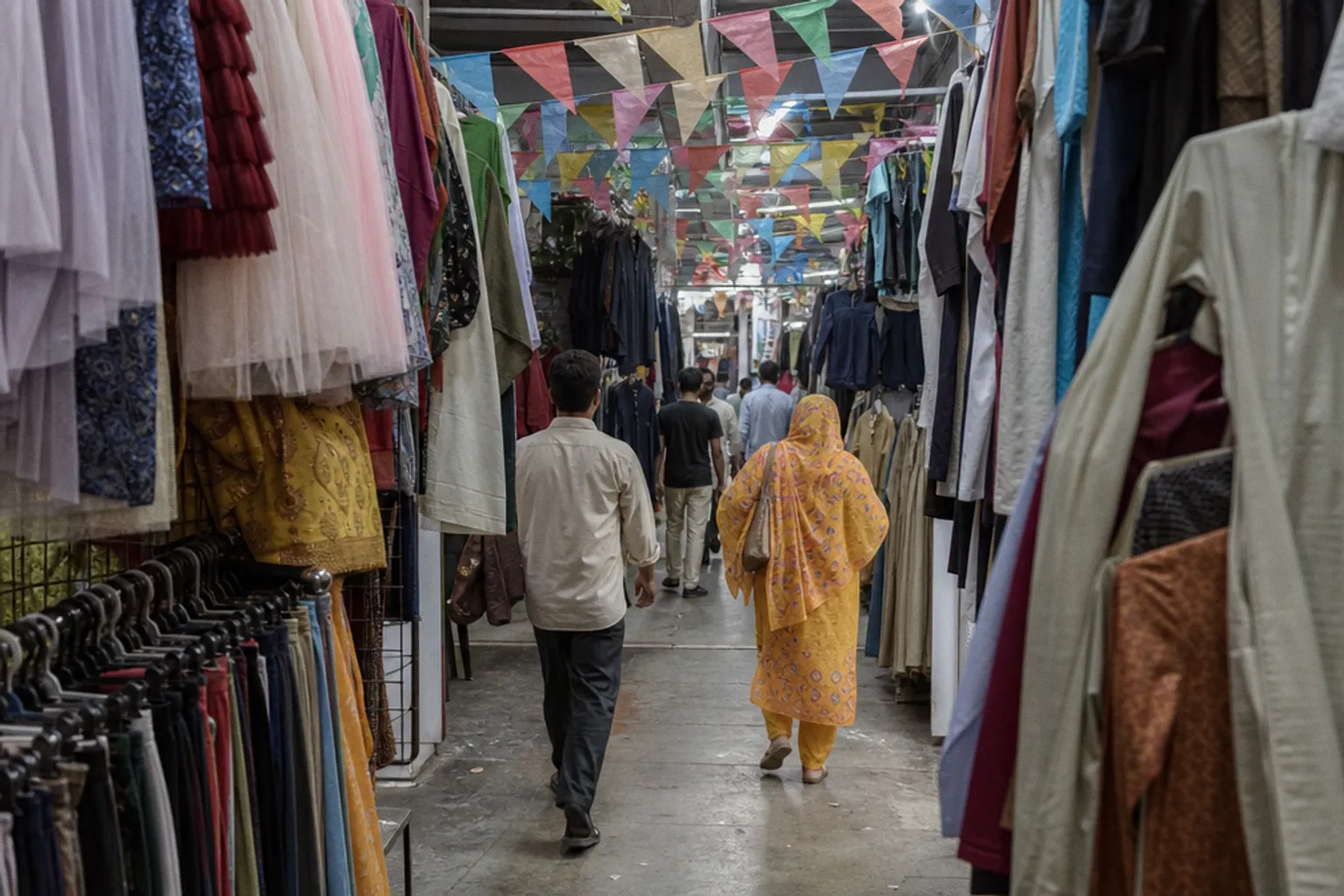
The gap between the two sub-sectors is wide enough to reframe the narrative. Broad-based textile growth is concentrated in upstream and intermediate categories — yarn, fabric, handicrafts, raw materials — which compete less directly with Bangladesh's cut-make-trim value proposition. The 11.25% apparel contraction, by contrast, is the segment where Indian manufacturers overlap most directly with Bangladeshi exporters in EU and US order books. Apparel's shrinking share of India's total merchandise exports suggests that whatever margin pressure is squeezing Indian garment makers is not being offset by domestic scale advantages. CITI's framing — buoyancy undermined by apparel weakness — implicitly acknowledges that the headline number is being carried by categories Bangladesh does not contest at scale.
For Bangladeshi producers, the read-through is conditional. A weakening Indian apparel export base does not automatically redirect demand to Dhaka; it reflects demand-side softness in major importing markets. But it does signal that Indian competitiveness in finished garments is eroding relative to its own upstream segments, a shift that complicates the bilateral trade arithmetic under existing and pending South Asian trade frameworks.
Bharat Tex 2026 and the policy push
The data lands on the eve of Bharat Tex 2026, the four-day exposition opening 14 July at Bharat Mandapam in New Delhi under the Bharat Tex Trade Federation and the Ministry of Textiles. Organisers expect over 4,000 B2B meetings, more than 30 MoUs, and participation from delegations across 20-plus countries. Eight states are sponsor partners, nine additional states and union territories are exhibiting, and dedicated investor-connect sessions are scheduled for Gujarat, Uttar Pradesh, Karnataka, Madhya Pradesh, Punjab, Bihar, Maharashtra, Telangana, and Tamil Nadu — all anchored in the government's PM MITRA parks framework and the 5F Vision spanning farm, fibre, factory, fashion, and foreign markets.
The event's scale is itself a policy signal. Centre-state coordination, the depth of the MSME outreach, and the explicit positioning of textiles as a strategic export pillar indicate that New Delhi is treating the segment's underperformance as an institutional problem requiring coordinated intervention, not a cyclical adjustment. For Bangladesh, the relevant variable is whether India's domestic capacity-building translates into incremental apparel competitiveness once global demand normalises — a question the Bharat Tex platform is explicitly designed to accelerate.
What to track
Three indicators will determine whether June's divergence widens or reverses in the second half of FY2027. First, apparel-specific export prints in July and August, which will show whether the 11.25% contraction is a one-off or a trend. Second, the volume of binding sourcing commitments emerging from Bharat Tex 2026's B2B meetings, particularly those involving EU and US buyers who also place orders with Bangladeshi factories. Third, any policy or currency response from the Ministry of Textiles targeting the apparel sub-sector, given the gap between the 9.64% textile growth and the apparel decline is too wide to be addressed by promotional activity alone.
A related operational shift across global trade events is the integration of digital infrastructure — from blockchain-verified supply chains to tokenised marketplace tools — into traditional sourcing formats. The growing overlap between physical expos and platform-based commerce is explored in coverage of how digital conference formats are reshaping trade networking, a parallel worth monitoring as Bharat Tex 2026 unfolds. The structural question for Bangladesh's apparel sector is not whether Indian textiles are growing, but whether the apparel weakness visible in this dataset is cyclical demand softness or the early signal of a deeper competitiveness gap.