Compare Dhaka Football Academies to Avoid Selection Mistakes
The player-to-coach ratio is 20:1. Three sessions a week, no video analysis. The annual fee is higher than a mid-range smartphone, with no transparent breakdown.
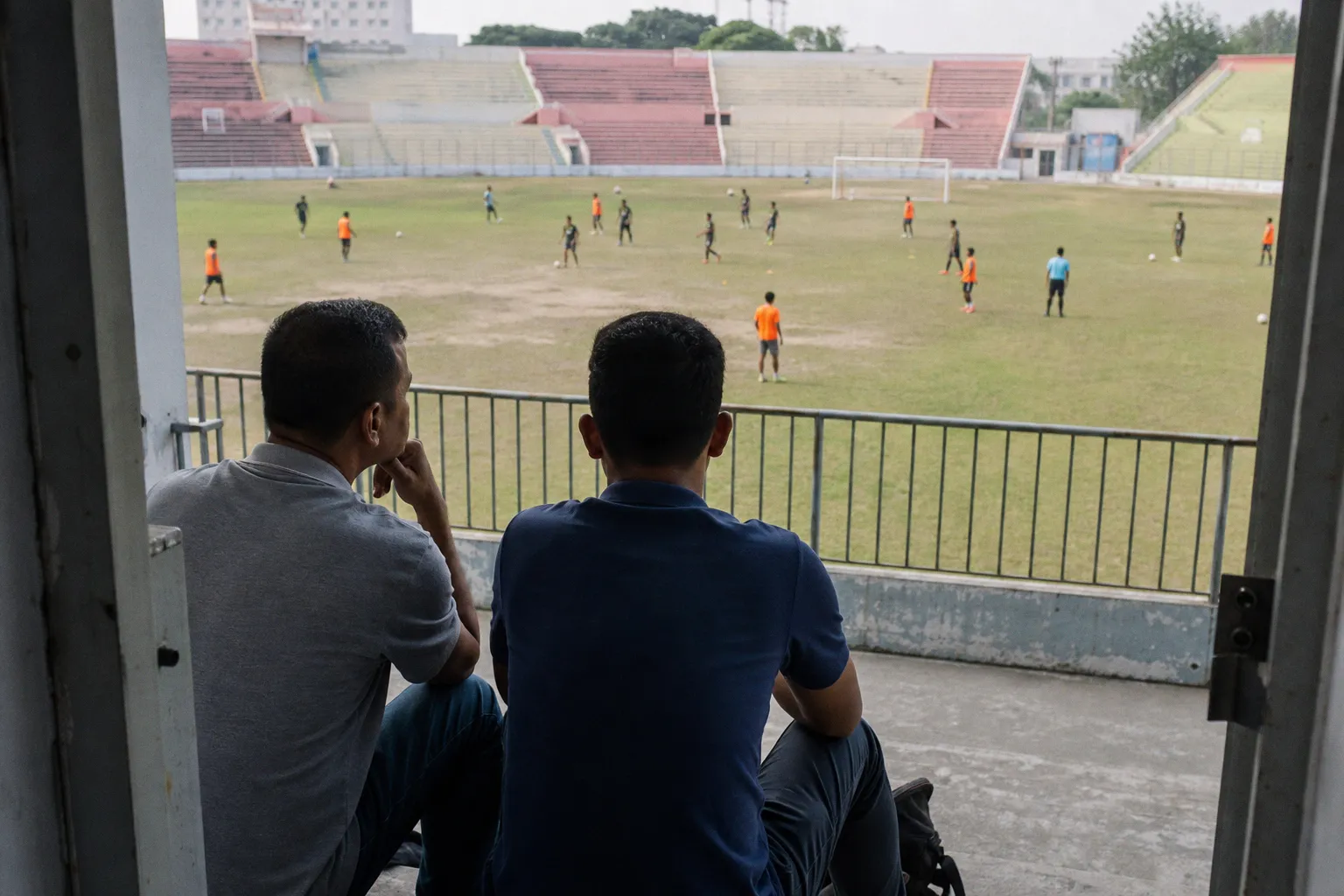
This isn't a hypothetical—it's the baseline of at least a dozen so-called "academies" operating in Dhaka right now, cashing in on the football boom with little to show for it on the pitch. Parents, driven by dreams of BPL contracts or international trials, are writing checks based on glossy brochures and empty promises. The selection process isn't a formality; it's a minefield where a single wrong step means two years of wasted training and money. The margin for error is zero, and the cost of getting it wrong is a young player's prime development years.
Dhaka's football academy scene has grown fast—maybe too fast for its own good. The sport's rising visibility, fueled by BPL coverage and social media highlights of European leagues, has created genuine demand. But demand without regulation breeds opportunism. New operations launch every season, many run by people whose primary qualification is a business plan, not a coaching philosophy. The challenge for families is separating the institutions that develop footballers from the ones that merely collect fees.
The First Filter: Is It Even Recognized?
Before you look at the kits or the name on the gate, there's one non-negotiable question: is this outfit affiliated with the Bangladesh Football Federation? This isn't a suggestion; it's the primary filter. The BFF is the governing body, and its recognition—or lack thereof—tells you everything about an academy's legitimacy. An unaffiliated academy operates in a vacuum. There are no standardized curricula to adhere to, no oversight of coaching methods, and, critically, no official pathway for player progression into the national or league systems. It's a closed loop with no exit.
Checking this is straightforward. The BFF maintains a registry of recognized clubs and academies. If the name isn't on that list, or if the administration gives you a vague runaround when you ask for their registration details, that's the first red flag. It's a clear signal that the operation is built on marketing, not on a foundation of football development.
Affiliation also matters for insurance and medical protocols. BFF-recognized academies are expected to follow basic safety standards—medical clearance before participation, access to first aid during training, and a protocol for injury management. Unaffiliated operations often skip these entirely. A twisted ankle on an unmaintained field with no first-aid kit isn't just inconvenient; it can derail a young player's entire season or worse. The governance piece isn't bureaucratic overhead. It's a safety net.
Coaching: Credentials Over Charisma
The second, equally sharp filter is the coaching staff. A charismatic ex-player who tells great stories is not the same as a certified coach. The metric is professional licensing, and in this region, that means AFC (Asian Football Confederation) or FIFA certification. An AFC 'C' license is the bare minimum for a head coach overseeing a youth program. For senior or elite pre-professional tracks, you should be seeing 'B' or 'A' licenses. This isn't elitism; it's a guarantee of structured pedagogy. A licensed coach understands periodization, age-appropriate physical loading, and tactical progression. An unlicensed one runs drills.
The player-to-coach ratio is the second part of this equation. The research benchmarks a maximum of 15:1 for effective training. Anything beyond that, and individual feedback evaporates. A coach cannot correct a defender's body shape or a midfielder's first touch in a 25-player mob. They just run sessions. Ask for the head coach's license number. Ask for the ratio. If they hesitate, walk away.
Look beyond the head coach, too. Who else is on the staff? A credible academy will have assistant coaches, a dedicated goalkeeping coach for older age groups, and ideally access to a physiotherapist or sports science advisor—even on a part-time basis. If one person is responsible for everything from warm-ups to tactical sessions to fitness programming, the depth of coaching simply isn't there. Youth football demands specialization at every level, just as the players themselves are expected to specialize in positions and roles as they develop.
A coach without an AFC license is just a supervisor. You're paying for instruction, not administration.
Infrastructure: More Than Just a Patch of Grass
You can't develop footballers on a sandlot with crooked lines. Dedicated training infrastructure is a core requirement. This means a maintained grass or artificial turf pitch of regulation size—not a multi-use school field—along with proper goals, training cones, and basic fitness equipment. The absence of a dedicated pitch forces sessions into sporadic bookings at public grounds, destroying training continuity. It also signals a lack of serious investment.
Dig into the operational structure. Reputable academies categorize players rigorously by age: Under-12, Under-14, Under-17, and Under-19 groups are standard. Each should have a tailored curriculum. A combined U-13/U-15 "youth squad" is a red flag. It means lumping kids in different physical and cognitive development stages together, which is the antithesis of elite training. Frequency is the final piece. Minimum is 3-4 sessions per week. Anything less, and skill acquisition grinds to a halt between sessions. It's a part-time hobby, not a development pathway.
Consider also what happens during Dhaka's monsoon months. A facility with no covered or indoor training option effectively shuts down for weeks at a time during the rainy season. The better-prepared academies have contingency plans—indoor spaces for fitness and tactical theory sessions, or artificial turf pitches that drain quickly after rain. This operational resilience separates organizations that think long-term from those that react to circumstances. Football development doesn't pause for weather, and neither should the institution you're investing in.
Equipment quality deserves scrutiny as well. Are training balls appropriate for the age group in both size and weight? Are there agility ladders, rebounders, and small-sided game goals for technical work? Or is everything improvised? These details paint a picture of how seriously the academy takes its day-to-day craft.
The Pathway Problem: Does the Road Actually Lead Somewhere?
An academy's worth is measured by its exit strategy. What happens when a player outgrows the U-17s? A standalone academy with no connections is a dead end. The gold standard is a formal partnership or affiliation with a professional club, particularly those in the Bangladesh Premier League. These partnerships create a recognized pathway: the academy acts as a feeder system, with scouts regularly attending sessions and standout players getting trials with the senior or reserve teams.
Without this link, a player's development is in a vacuum. They might improve technically, but they have no route to professional exposure. They're left to navigate the opaque world of open trials and agent networks alone. When evaluating, ask direct questions: "Which BPL clubs do you have affiliation agreements with? Can you provide names of players who have moved into professional setups from your program in the last 24 months?" Concrete answers indicate a functioning pathway. Evasive responses reveal a finishing school with no graduation.
Beyond BPL affiliations, consider the broader ecosystem. Does the academy participate in recognized youth leagues and inter-district tournaments? Competitive match exposure is where training is tested and where scouts actually look. An academy that only plays internal friendlies is invisible to the wider football world. Ask about their tournament calendar for the past year. If it's thin or nonexistent, the players are training in isolation—and isolation is where potential goes to stall.
Some academies also facilitate opportunities beyond Bangladesh. Trials with clubs in India's I-League or connections to trials in the Gulf states or Southeast Asia exist, though they remain rare and should be viewed with caution. If an academy claims international placement capability, demand specifics: which clubs, which players, when, and through what process. Vague promises of "international exposure" without documented examples are marketing copy, not career planning.
The Financials: Reading the Fee Structure Like a Contract
This is where the skepticism must be highest. Non-transparent fee structures are endemic. The advertised "monthly tuition" is often just the entry point. Additional charges for kit, tournament entry fees, "coaching supplements," facility upgrades, and end-of-year showcases can inflate the total cost dramatically. This ambiguity is a hallmark of operations focused on revenue extraction over athlete development.
Demand a complete, itemized breakdown of all potential costs for the year. Compare it across shortlisted academies. If Academy A charges a flat all-inclusive fee and Academy B has a lower base fee with a long list of add-ons, the total cost might be identical, but the business models are worlds apart. The former values transparency; the latter values margins. Also, scrutinize contracts for exit clauses. What are the penalties for withdrawal mid-season? Understanding these financial mechanics prevents being locked into a poor investment.
Watch for the "showcase" model in particular. Some academies charge significant fees for end-of-season showcases—events where players perform in front of invited coaches or scouts. These events can be legitimate networking opportunities, but they can also be revenue-generating spectacles with little real professional exposure. Ask who, specifically, attended last year's showcase. Were any players signed or offered trials as a direct result? If the answer is vague, you're likely paying for an event, not a pipeline.
Scholarship and merit-based fee reduction policies are another useful signal. Academies genuinely invested in developing talent—not just collecting tuition—will have mechanisms to subsidize promising players from lower-income families. The existence of such programs suggests a philosophy that prioritizes football outcomes over financial ones. Their absence, particularly at academies with premium pricing, raises questions about institutional priorities.
| Comparison Metric | Red Flag Academy | Professional Academy |
|---|---|---|
| BFF Affiliation | Vague, unverifiable | Clearly documented, registry can be cross-checked |
| Head Coach Credential | Unlicensed or only "playing experience" | Minimum AFC 'C' license holder |
| Player-to-Coach Ratio | 20:1 or higher | 15:1 or lower |
| Training Frequency | 1-2 sessions per week | 3-4 sessions per week |
| Age-Group Structure | Combined, broad age ranges | Specific: U-12, U-14, U-17, U-19 |
| Facility | Rented public school ground | Dedicated training pitch |
| Professional Pathway | "We help players get noticed" | Formal partnership with named BPL club |
| Fee Structure | Opaque, many hidden costs | Transparent, itemized annual breakdown |
The Verdict: A Demand for Due Diligence
The explosion of football academies in Dhaka is a double-edged sword. More options mean more opportunity, but also more noise and more traps. The system is not going to regulate itself. The Bangladesh Football Federation's oversight is not granular enough to police every private operation. The burden of due diligence falls squarely on the parents and the players themselves.
Treat this selection process like a scout evaluating a prospect. Be clinical. Check the credentials—coaching licenses and BFF affiliation. Measure the infrastructure and the training load. Trace the pathway: where, specifically, does this road end? And dissect the financials. The academy that withstands this scrutiny, that provides clear, verifiable answers to these hard questions, is the one worth the investment. The one that deflects with hype and glossy brochures is the one you must avoid.
Talk to parents of current and former players. Visit a training session unannounced. Watch how coaches interact with players during a live drill—not a staged demo, but an actual Tuesday evening session. The truth about any academy lives in its daily operations, not its brochure. The future of a young footballer is too important for guesswork.