BKSP vs Private Sports Academies: Choosing the Best Path
Bangladesh Krira Shikkha Protishtan operates across 21 disciplines from a residential campus in Savar covering more than 100 acres, alongside regional centres in Chittagong, Khulna, Barisal, Sylhet, Rajshahi and Dinajpur.
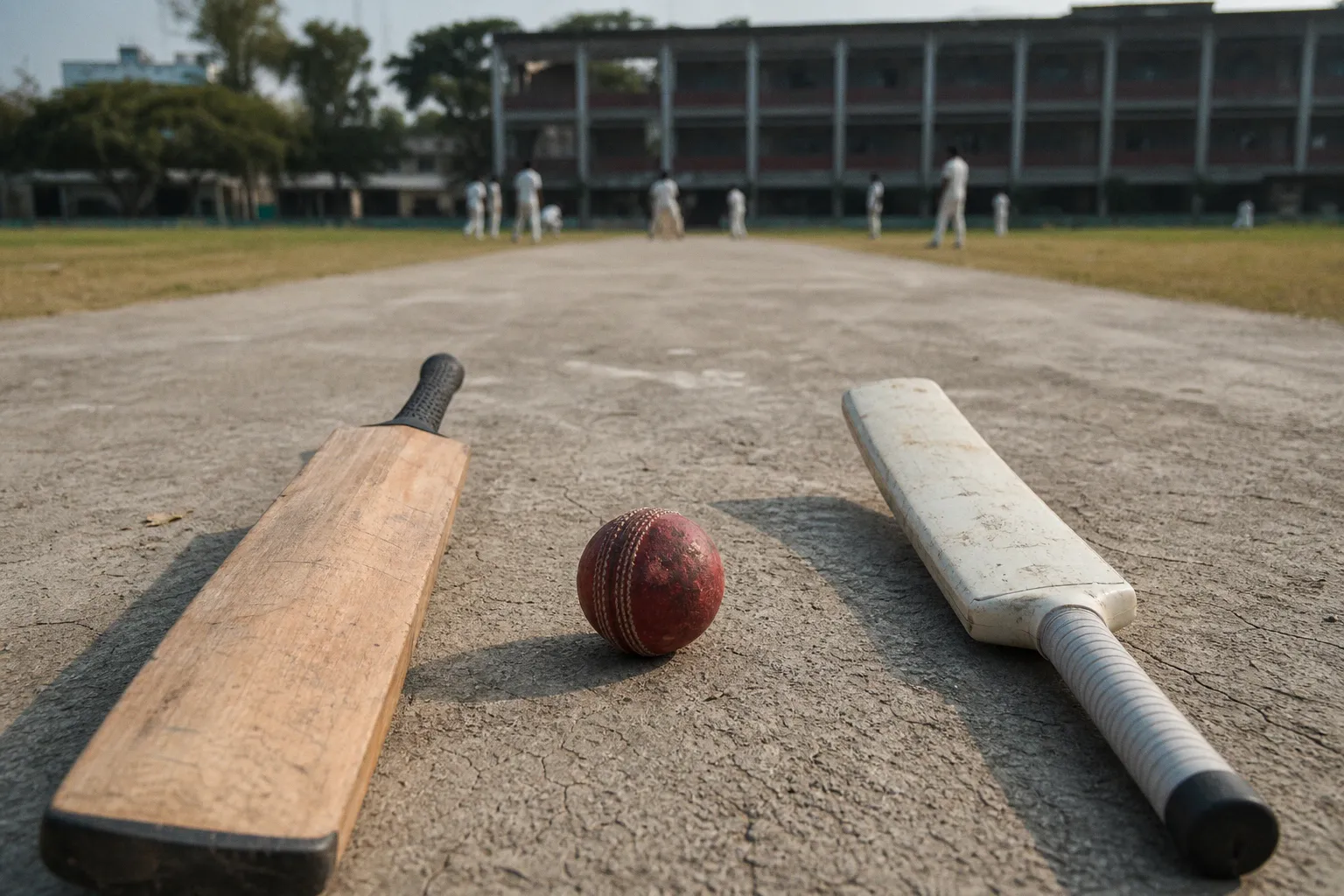
That scale is not merely a facilities advantage. It reflects a state-backed development model in which schooling, accommodation, coaching, medical screening and athlete selection are consolidated within one institutional structure.
The comparison between BKSP and a private sports academy in Bangladesh is therefore not a narrow question of which venue has better nets, a newer gym or more training hours. It is a choice between two different systems of athlete development. BKSP is a statutory autonomous institution under the Ministry of Youth and Sports, built to identify young talent and carry it through an academic and sporting pathway. Private academies operate closer to a fee-funded service model: they can be more specialised, more flexible and, in some cases, better equipped for a particular sport, but they generally do not replace a conventional school-and-residential framework.
For families considering cricket, football, athletics or another competitive discipline, the decisive variables are age, sporting readiness, academic requirements, household income and the realistic level of the athlete’s ambition. Confusion arises when these variables are treated as interchangeable.
The BKSP model: an institutional pathway, not simply a coaching centre
BKSP was established in 1974 as the Bangladesh Institute of Sports, received autonomous status in 1983, and began formal academic activities on 14 April 1986. Its legal and administrative position matters because it explains the institute’s operating logic. It is not a privately owned academy selling coaching sessions. It is part of the country’s sports-development architecture.
The central feature is integration. A selected cadet receives sports training alongside general academic education, beginning at school level for eligible age groups and extending to degree-level study in relevant programmes. This is particularly consequential in Bangladesh, where a young athlete’s sporting progress can otherwise depend on an unstable arrangement between school attendance, club practice, private coaching and family logistics.
At BKSP, the athlete does not need to commute between those systems every day. The institution controls the training calendar, residential environment and academic timetable. That creates continuity, which is one of the least visible but most valuable inputs in high-performance sport. A talented fast bowler who trains regularly but misses classes, lacks recovery oversight or travels several hours each day has not entered a sustainable development system. BKSP’s model is designed to reduce that fragmentation.
Its portfolio also distinguishes it from most private operators. Cricket and football attract commercial attention, but BKSP’s 21 disciplines include athletics, archery, swimming, gymnastics and hockey. This breadth is a public-policy function. Sports with limited private revenue potential still require coaching infrastructure if Bangladesh is to maintain a viable national talent pipeline.
The system is not frictionless. Its selection process is deliberately restrictive. Applicants typically enter through regional physical and medical tests before progressing to an intensive final training camp lasting between three and seven days. School-level entry is generally for younger candidates, often below 15 depending on the discipline. A family cannot treat BKSP admission as a later corrective measure after several unstructured years of training.
BKSP does not sell access to training. It allocates a limited institutional resource through selection.
That distinction also explains why BKSP is often misunderstood in comparisons with a private cricket academy in Dhaka or a football academy operating from a rented ground. The question is not whether one can register at BKSP in the same way one enrols in an evening programme. The relevant question is whether the athlete can clear a competitive intake process and adapt to a residential, disciplined and academically integrated environment.
Private academies: specialisation, speed and a fee-funded structure
Private academies occupy a different segment of the market. Their core advantage is specialisation. A cricket-focused operation can concentrate capital, coaching time and marketing around a single sport rather than maintain infrastructure for 21 disciplines. This can produce a more targeted training environment, especially for families whose child has already committed to cricket and needs technical repetition rather than broad-based athlete development.
Masco Shakib Cricket Academy in Rupganj illustrates the premium end of this model. Its facilities include an oval-shaped ground, bowling machines and virtual cricket arrangements, with monthly charges reported in the Tk17,000–18,000 range. Those fees are substantial in the Bangladeshi context, but they finance an infrastructure proposition that many conventional local academies cannot replicate.
At a different price point, Pubergaon Krira Shikkha Protishtan, or PKSP, operates a semi-residential proposition. Its stated structure includes a Tk10,000 admission fee, Tk7,000 monthly tuition, Tk3,000 for hostel accommodation and Tk6,000 for food. The combined recurring monthly cost is therefore Tk16,000 before incidental expenses. The academy opened in late 2023, representing a newer private attempt to build a more contained training setting outside the state model.
The lower-cost end remains important. Dhanmondi Cricket Academy, established in 2000, has charged an admission fee of Tk2,000 and a monthly fee of Tk1,000. Such academies serve a much wider base of young players who require regular coaching but neither need nor can fund a premium residential structure.
The private market is consequently not one market. It has at least three identifiable tiers:
1. Local non-residential academies provide basic coaching at relatively low monthly cost, commonly fitting around school and family schedules. Their practical value lies in repetition, match exposure and an accessible first step into organised sport.
2. Premium specialised academies charge materially higher fees in exchange for advanced equipment, dedicated grounds and a more intensive coaching environment. They are most relevant where the athlete already has technical foundations and can use facilities such as bowling machines productively.
3. Semi-residential private institutions attempt to combine accommodation, food and training, but their cost base is structurally higher because these services are funded directly by parents rather than subsidised through the state.
For cricket, this segmentation can be productive. Private cricket coaching in Dhaka and its surrounding areas can give young players frequent contact with coaches without forcing them into a residential institution at an early age. For football, however, the market is less uniform. A parent searching for the best football academy in Dhaka should assess whether the academy has sustained access to full-size pitches, organised age-group competition and qualified position-specific coaching. A football programme built around intermittent ground rentals is not equivalent to a development pathway simply because it uses the word “academy”.
The financial comparison is about risk allocation
The most substantial difference in the BKSP versus private sports academy Bangladesh debate is financial. BKSP’s fees are subsidised and determined according to guardian income categories. The exact breakdown of those groups is not publicly settled in a standard format, but the policy direction is clear: the state absorbs part of the cost of developing selected athletes.
Private academies have no comparable fiscal buffer. Their coaching, accommodation, food, equipment and facility costs must be recovered through fees, sponsorship or other commercial income. In practice, most rely heavily on parental payments. The resulting price differential is not evidence that one system is inherently more serious than the other. It is evidence that the two systems distribute cost differently.
| Parameter | BKSP | Private academy model |
|---|---|---|
| Institutional status | Statutory autonomous body under the Ministry of Youth and Sports | Privately managed training provider |
| Core offer | Integrated education, residential life and multi-sport training | Specialised coaching, with facilities varying by provider |
| Fee structure | Subsidised and linked to guardian income groups | Market-based fees, usually fixed by programme |
| Entry route | Competitive regional tests, medical screening and final camp | Registration or academy-specific trials, depending on provider |
| Accommodation | Embedded within the residential institutional model | Usually non-residential; hostel options may carry separate charges |
| Academic provision | General education alongside sport, up to degree-level pathways | Usually sports training only, without equivalent formal academic curriculum |
| Best fit | Selected young athlete seeking a long-term institutional pathway | Athlete needing sport-specific development, flexibility or local access |
For a household comparing figures directly, the difference can be large. A premium academy charging Tk18,000 per month creates an annual training commitment of more than Tk200,000 before transport, equipment, tournament travel and personal medical costs. PKSP’s stated Tk16,000 monthly total similarly produces a substantial recurring household obligation, in addition to its Tk10,000 admission fee.
A local academy charging Tk1,000 monthly is financially more accessible, but its lower fee should not be read as proof of lesser coaching commitment. It usually reflects a different operating structure: non-residential sessions, fewer capital-intensive facilities and a smaller administrative apparatus. The right comparison is therefore not premium versus cheap. It is cost versus the specific development input being purchased.
Families also need to avoid a common accounting error: treating a private academy’s monthly fee as the full cost of sport. Non-residential training may require repeated travel across Dhaka’s congested transport network, weekday supervision by parents, meals outside home and ongoing school coordination. A lower advertised fee can become expensive when those indirect costs are added. Conversely, a higher residential fee may reduce some daily logistical costs while concentrating financial risk in a single provider.
The relevant calculation is not the monthly fee alone; it is the total household cost of sustaining a credible training routine.
Selection and accessibility: open enrolment is not the same as access
Private academies appear more accessible because many permit direct enrolment. That is operationally true, but it needs qualification. Registration provides access to coaching sessions; it does not guarantee a pathway into district, divisional, franchise or national-level competition. The quality of progression depends on the coaching staff, the academy’s match network, the player’s ability and the broader club ecosystem.
BKSP applies the opposite logic. It restricts entry sharply, but candidates who qualify enter a more comprehensive system. The preliminary regional tests and later intensive camp are intended to assess physical capacity, medical suitability and sport-specific potential. This is a resource-allocation mechanism: residential places and state-funded coaching are limited, so the institution selects rather than simply enrols.
That creates two distinct forms of exclusion.
Private academies can exclude through price, geography or scheduling. A child in a district without a well-run academy may have limited options even if the formal fee is modest. Premium facilities located around Dhaka or Rupganj are not equally accessible to families outside those areas.
BKSP can exclude through competitive selection, age rules and institutional fit. A talented player who begins structured training late may not qualify for the relevant school-level intake window. An athlete may also be strong in one technical area but not yet meet the physical or medical thresholds required at selection.
Neither route should be presented as universally fair or unfair. They solve different problems. The private market expands the number of entry points. BKSP concentrates public investment on athletes who have passed a defined filter.
For parents navigating Bangladesh sports academy admission, the practical implication is timing. An athlete who is within the relevant age band and shows clear physical and technical potential should treat BKSP trials as a serious strategic opportunity, not as an option to consider after exhausting private alternatives. At the same time, those who do not secure admission should not interpret that outcome as a final verdict on sporting capacity. A private academy, school competition, district league or club programme can still provide the volume of organised play needed for later advancement.
Training standards: facilities matter, but only within a system
Facility comparisons are often reduced to visible assets. Bowling machines, indoor nets, gym equipment, turf wickets and virtual simulation are easy to market because they are concrete. Yet equipment has limited value without a structured coaching plan, workload management and competitive exposure.
A bowling machine can assist a batter working on a specific length, pace or line. It cannot independently teach decision-making under field pressure. Virtual cricket may improve pattern recognition in controlled settings. It does not replace match temperament, fitness or the ability to manage a changing pitch. The same principle applies to football: a well-maintained pitch is necessary, but repeated small-sided drills without competitive leagues do not automatically create a complete player.
BKSP’s comparative strength is system continuity. Because it combines education and sport in one institution, it can control training frequency and athlete routine more consistently than a typical evening academy. It can also provide an environment where athletes train among peers across multiple disciplines, which can support physical preparation and performance culture.
Private academies can be stronger when the required intervention is narrow and immediate. A young cricketer needing technical work on pace bowling, wicketkeeping or power-hitting may benefit from a specialised coaching setting. A player already enrolled in a strong school or college may not need BKSP’s academic component, and may prefer to retain existing educational and family arrangements while adding focused training.
The critical issue is whether the programme has a development sequence. A credible academy should be able to explain, in practical rather than promotional terms:
- how players are grouped by age and ability;
- how often they play competitive matches, not only net sessions;
- how coaches monitor workload, especially for young fast bowlers;
- whether there is a progression route into club, district or divisional cricket and football;
- how the academy manages injury, recovery and basic physical conditioning;
- whether it can accommodate school examinations rather than treating education as an external inconvenience.
The absence of a formal academic curriculum is not automatically a defect in a private academy. It becomes a structural weakness only when no workable school arrangement exists around it. BKSP has already internalised that coordination; private providers must demonstrate it through schedule design and transparent communication with families.
Career planning: choose the system that fits the athlete’s stage
The BKSP sports career path is most coherent for an athlete who is young enough for intake, capable of passing selection and willing to accept a residential institutional environment. It offers an unusually integrated route in a country where sporting opportunity is otherwise unevenly distributed between regions, schools and private clubs.
That does not mean BKSP is the mandatory route to elite sport. Bangladesh cricket and football have always drawn players from clubs, schools, districts and informal local structures as well as formal institutions. A private academy may be the more rational choice for a player who needs specialist training, cannot relocate, has a settled academic programme or is developing later than the typical BKSP admission stage permits.
The mistake is to choose based on the most visible signal. A large campus does not guarantee that every athlete will thrive within a regimented system. A premium monthly fee does not guarantee superior long-term outcomes. An inexpensive local academy is not necessarily inadequate if it provides regular coaching, competitive fixtures and a route into stronger club cricket or football.
The decision should follow a sequence of institutional questions rather than aspiration alone:
1. Is the athlete eligible and realistically competitive for BKSP selection now? If the answer is yes, the opportunity deserves priority because the window is age-sensitive and the subsidy materially changes the financial equation.
2. Does the athlete require an integrated academic and residential structure? For families unable to manage daily travel, school coordination and training supervision, BKSP’s consolidated model has clear economic and logistical value.
3. Is there a specific technical need that a specialist academy can address better? Premium cricket facilities can be justified where the player has a defined development plan, not merely a general desire for “advanced” coaching.
4. What is the sustainable budget over several years? A household should assess the cumulative cost of tuition, hostel, food, transport, equipment and tournaments, rather than commit on the basis of a single monthly fee.
5. What competitive network sits beyond the academy? Coaching without matches and progression opportunities is a partial service, however polished the facility may appear.
Bangladesh’s sports system will continue to rely on both models. BKSP supplies a public, selective and multi-sport pipeline that private operators are unlikely to replicate at comparable cost. Private academies supply capacity, specialisation and geographical flexibility that a centrally administered institution cannot fully provide.
The market will likely become more segmented: government-backed residential development for selected youth athletes, premium technical academies for families able to finance them, and lower-cost local centres feeding school, club and district competition. For athletes and parents, the rational choice is not to identify a universally “best” academy. It is to identify which institutional structure can convert the player’s current ability into sustained competitive opportunity without creating an academic or financial deficit elsewhere.