Kacchi Biryani vs Tehari: Which Bangladeshi Dish is Best?
A traditional Kacchi kitchen can run at a 2:1 meat-to-rice ratio: two kilograms of mutton for every kilogram of rice. That is not a minor detail.
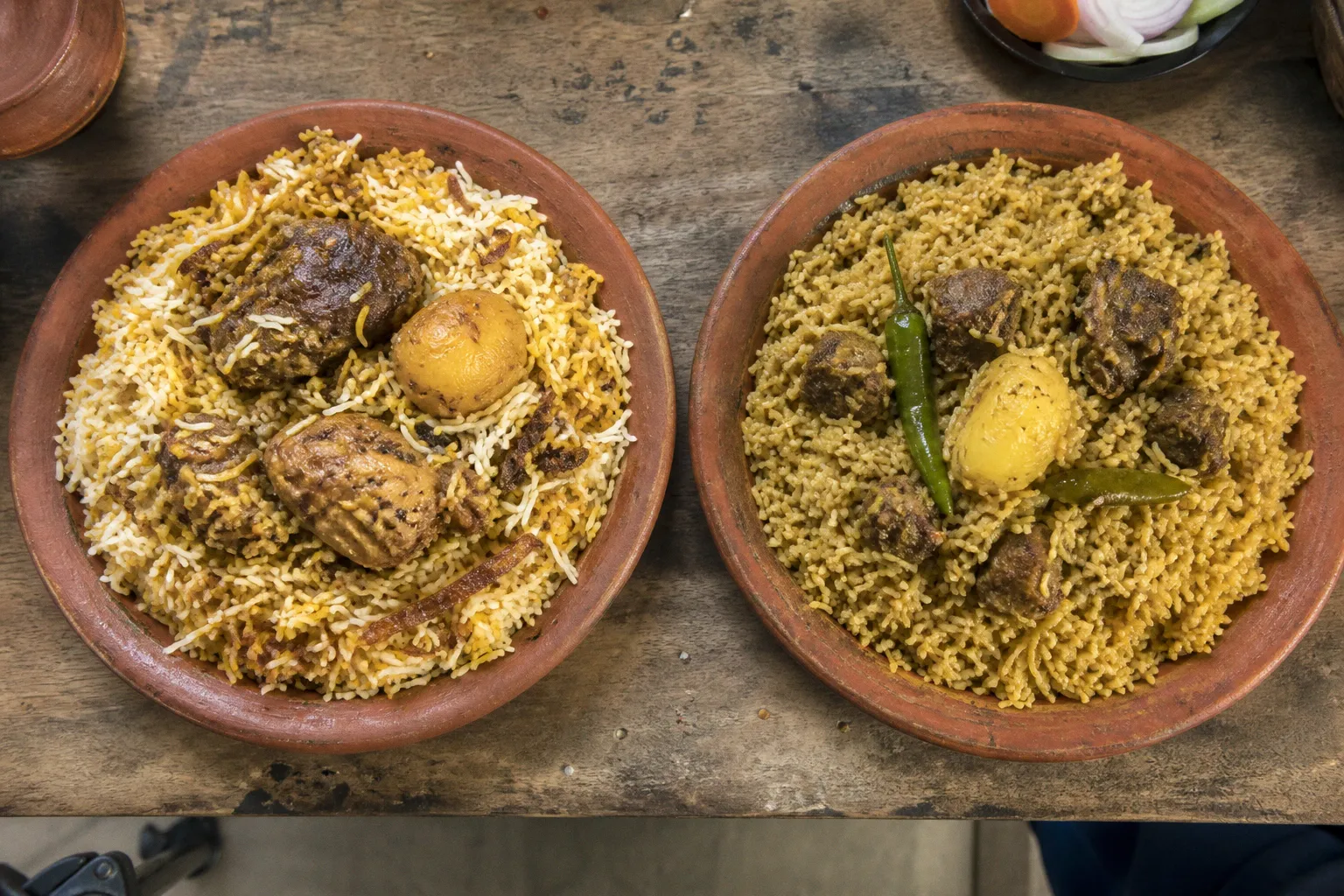
It tells you exactly what Kacchi Biryani is trying to do—dominate the plate with fat, fragrance and slow-cooked meat. Tehari takes the opposite route. Smaller beef pieces. Rice cooked in the curry itself. Mustard oil driving the attack.
The Kacchi Biryani vs Tehari debate is often handled badly, as if one dish must knock the other out. It does not. They are different formations, built for different appetites and different moments in Dhaka life. One is a layered, sealed-pot production with mutton at its centre. The other is a direct, muscular one-pot rice dish, sharpened by green chilli and mustard oil.
For this Bangladeshi food review, the useful question is not which name carries more hype. It is what reaches the plate: how the meat was treated, how the rice took flavour, whether the fat is controlled, and whether the kitchen understands its own dish.
The art of dum: Kacchi is won or lost before the pot is sealed
“Kacchi” comes from kachha—raw. That rawness is the defining tactical decision. In an authentic Dhakai Kacchi Biryani, marinated mutton or goat goes into the pot uncooked, layered with par-boiled rice, potatoes and aromatic elements before the vessel is sealed for dum cooking.
No shortcut survives this method. The mutton has to soften in the trapped steam without turning the rice into a wet, greasy collapse. The rice has to finish cooking from the moisture and fat rising through the pot, while still holding individual grains. In many traditional recipes, the final dum phase runs around 45 to 50 minutes after sealing. Timing matters. Heat discipline matters more.
The standard flavour unit is ghee, not mustard oil. Then come kewra water, rose water and saffron-infused milk, used with a light hand by serious kitchens and with alarming enthusiasm by weaker ones. Too little and the biryani feels flat. Too much and the plate smells like a perfume counter with a meat problem.
Traditional Dhakai Kacchi commonly uses aromatic Chinigura rice, though Basmati appears frequently as well. The choice changes the match. Chinigura gives a more compact, fragrant grain and sits naturally in the local style. Basmati provides length and visual drama, but length alone is not quality. A tall grain that has lost its bite is still a failed grain.
The mutton should be the main event: substantial pieces, properly tender, carrying spice beneath the fat rather than wearing a thick paste on the outside. Fried potato is not decoration either. In a good Kacchi, it has absorbed the drippings and aromatics without breaking apart. In a bad one, it is an oily filler deployed to make a small portion look generous.
Kacchi is not “rice with meat.” It is a sealed-pot calculation in which one weak layer can ruin the whole result.
That calculation explains why Kacchi has become the formal-occasion heavyweight of traditional Bangladeshi dishes. It arrives with ceremony, richness and a clear expectation of excess. But this is also where restaurants overplay their hand. More ghee is not automatically more flavour. More colouring is not luxury. A Kacchi should feel rich, not exhausted.
Tehari’s mustard-oil edge is the point, not an optional extra
Tehari begins with a different call. The beef is cut into smaller, bite-sized pieces and cooked first as a curry, typically with mustard oil and green chillies. Rice then goes directly into that gravy. There is no layered construction, no raw mutton waiting to resolve under a sealed lid. The flavour is already moving through the pot before the rice enters.
That is why Tehari eats differently. Kacchi has zones: fragrant rice on top, meat below, pockets of ghee, potato, occasional bursts of kewra. Tehari is more integrated. Its rice should be stained with the beef gravy and mustard oil, with spice distributed through every spoonful.
Mustard oil is the non-negotiable element in Old Dhaka Tehari. Remove it and the dish loses its high note—the sharp, almost nasal aroma that cuts through beef fat and keeps the plate from becoming monotonous. Green chillies do similar work. They are not there to turn Tehari into a chilli contest; they provide lift, a quick edge against the savoury base.
The meat choice matters. Traditional Tehari is beef, not mutton. Small cuts, sometimes with bones in older budget-conscious versions, are not a compromise when handled properly. They create a deeper, more direct gravy. The rice gets the benefit. This is a one-pot dish, and it has no place to hide.
Tehari’s reputation as working food is often reduced to a lazy line about affordability. The history is more specific. It gained widespread popularity during the World War II era, when higher meat prices encouraged cooks to work with smaller cuts, bones and potatoes. The result was not a lesser biryani. It became its own Dhaka institution—tighter, spicier and more practical in its structure.
That economy still shapes how Tehari is judged. A plate does not need grand presentation. It needs rice with a clean beef profile, mustard oil that is alive but not bitter, and meat that is not dry from being cut too small and pushed too hard over heat.
Kacchi Biryani vs Tehari: the mechanics on the plate
The difference is not cosmetic. Kacchi and Tehari use opposite systems to move flavour through rice. One relies on layering and steam. The other on absorption inside a seasoned gravy.
| Parameter | Kacchi Biryani | Tehari |
|---|---|---|
| Core meat | Raw-marinated mutton or goat | Pre-cooked beef in small pieces |
| Rice method | Par-boiled rice layered over meat, then dum-cooked | Rice cooked directly in beef curry gravy |
| Signature fat | Ghee | Mustard oil |
| Main aromatic profile | Kewra, rose water, saffron milk, warm whole spices | Mustard oil, green chilli, beef gravy, robust spices |
| Texture target | Separate, fragrant grains with tender large meat pieces | Unified, gravy-stained rice with compact beef pieces |
| Plate character | Rich, ceremonial, layered | Direct, savoury, sharp-edged |
| Common failure | Greasy rice, underdone mutton, artificial perfume | Bitter mustard oil, dry beef, muddy or over-soft rice |
That table is the practical core of any Dhaka street food review that claims to compare the two fairly. Calling Tehari “beef biryani” may help a first-time visitor orient themselves, but it misses the technique. Calling Kacchi simply “mutton rice” is worse. The methods define the dishes.
A strong Kacchi has separation. Pick up a spoonful and the grains should not clump into a heavy mass. The aroma should arrive before the first bite, but it should not overpower the mutton. The meat should release from the bone or yield cleanly under pressure. If it remains chewy, no amount of saffron-coloured rice rescues it.
A strong Tehari has cohesion without sludge. The rice is meant to be more unified than Kacchi, yes, but not porridge-like. Mustard oil should announce itself immediately, then settle into the beef and spice. If the oil tastes raw, acrid or dominant, the kitchen has missed the balance.
Tehari attacks from the first spoonful. Kacchi builds through layers. Confuse the two standards and the review is already off the pace.
There is also a portion question. Kacchi is designed to make a bigger statement. It carries large mutton pieces and fried potatoes, and its richness slows the eater down. Tehari is more compact, faster-moving, often better suited to a midday plate when the aim is satisfaction rather than ceremony.
Dhaka’s restaurant circuit: reputation is not a substitute for execution
Dhaka’s Kacchi circuit is crowded with established names: Grand Nawab, Sultan’s Dine, Hazi Biryani, Star Kabab and Fakruddin are among the restaurants regularly associated with the dish. The Tehari side has its own specialists, including Nanna Biriyani, Bismillah Tehari House, Shad Tehari Ghar and Maruf Biriyani House. Shad Tehari Ghar has operated since 1995, a useful marker in a city where new outlets can acquire a large social-media reputation long before their kitchen settles into consistency.
But brand recognition is only the fixture list. The plate decides the result.
For Kacchi, the best time to judge a restaurant is during a busy service, not after the rush. A kitchen can produce a good single pot under controlled conditions. The real test is whether the dum stays balanced when volume rises: whether mutton remains tender, whether the rice avoids drying at the edges, whether the perfume stays restrained.
Tehari faces another kind of pressure. It is often served fast, which means holding times can punish the rice. A batch that was sharp and properly loose at noon can become dense by late afternoon. Beef dries. Mustard oil flattens. The dish loses its quickness.
This is where diners need to stop treating price as a complete verdict. Premium Kacchi platters in Dhaka are commonly found around Tk 260 to Tk 300, but a higher bill does not guarantee better dum work. Tehari may cost less in many settings, yet a cheaper plate still has to deliver the central standard: beef flavour carried through the rice, not merely placed on top of it.
The broader market mood can change quickly—from restaurant spending to the kind of consumer caution reflected when world shares turn mixed after a Big Tech sell-off. Food businesses feel that pressure. But cutting corners in rice, meat or cooking fat is not strategy. It is a visible downgrade, and Dhaka diners detect it quickly.
What to order depends on the situation, not the hype
The “best food in Dhaka” label is a poor way to approach these dishes. It encourages a winner-takes-all answer where none exists. Better to decide what kind of meal you actually want.
Choose Kacchi when the meal calls for scale, fragrance and a slower pace:
1. You want mutton as the dominant flavour. Large, slow-cooked pieces are central to the experience. If the meat is an afterthought, the Kacchi has failed its basic assignment.
2. You prefer distinct layers. Rice, meat, potato and aromatic notes arrive in sequence rather than as one blended profile.
3. You are eating for an occasion. Family lunches, celebrations and long meals suit Kacchi’s richness better than a rushed break between errands.
4. You value dum technique. The appeal lies in controlled steam cooking. This is food where method is part of the pleasure.
Choose Tehari when you want a more immediate, beef-forward plate:
1. You want mustard oil’s sharpness. It is Tehari’s defining line, not a garnish.
2. You prefer every grain to carry the curry. There are no separate layers to excavate; the rice is cooked in the beef gravy.
3. You want a forceful lunch rather than a ceremonial feast. Tehari is direct and compact, with less pageantry and no loss of identity.
4. You enjoy chilli as a lifting note. Green chilli should energise the dish, not drown it.
Neither choice is a verdict on the other. A diner who wants floral aromatics, ghee and large mutton pieces should not order Tehari and complain that it lacks Kacchi’s softness. Equally, someone looking for mustard-oil bite and beef-rich rice should not order Kacchi expecting Old Dhaka Tehari’s intensity. Different game plans. Different requirements.
The final call: judge the method, not the mythology
Kacchi Biryani wins when the dum is disciplined: tender raw-marinated mutton, rice that remains separate, ghee used with control, and perfume that supports rather than performs. It is the more elaborate dish, but elaborate is not the same as superior.
Tehari wins when mustard oil cuts cleanly through the beef, green chilli brings lift, and the rice absorbs the gravy without collapsing. It has less theatre and more immediacy. No sealed-pot mystique. No need for it.
The blunt verdict is straightforward. Order Kacchi when you want a composed, rich centrepiece and are prepared to judge every layer. Order Tehari when you want a sharper, more unified plate that gets to the point. Dhaka needs both. Any kitchen that treats either one as just another rice dish is not preserving tradition. It is dropping the standard.